“I am the one holding the bag when our AI breaks a client contract. Every change our agents make now carries a receipt the machine did not write, one my carrier can recompute.”
— ______________________________
Would you put your name on this? Would your boss? Would anyone you know?
— Elias Moosman
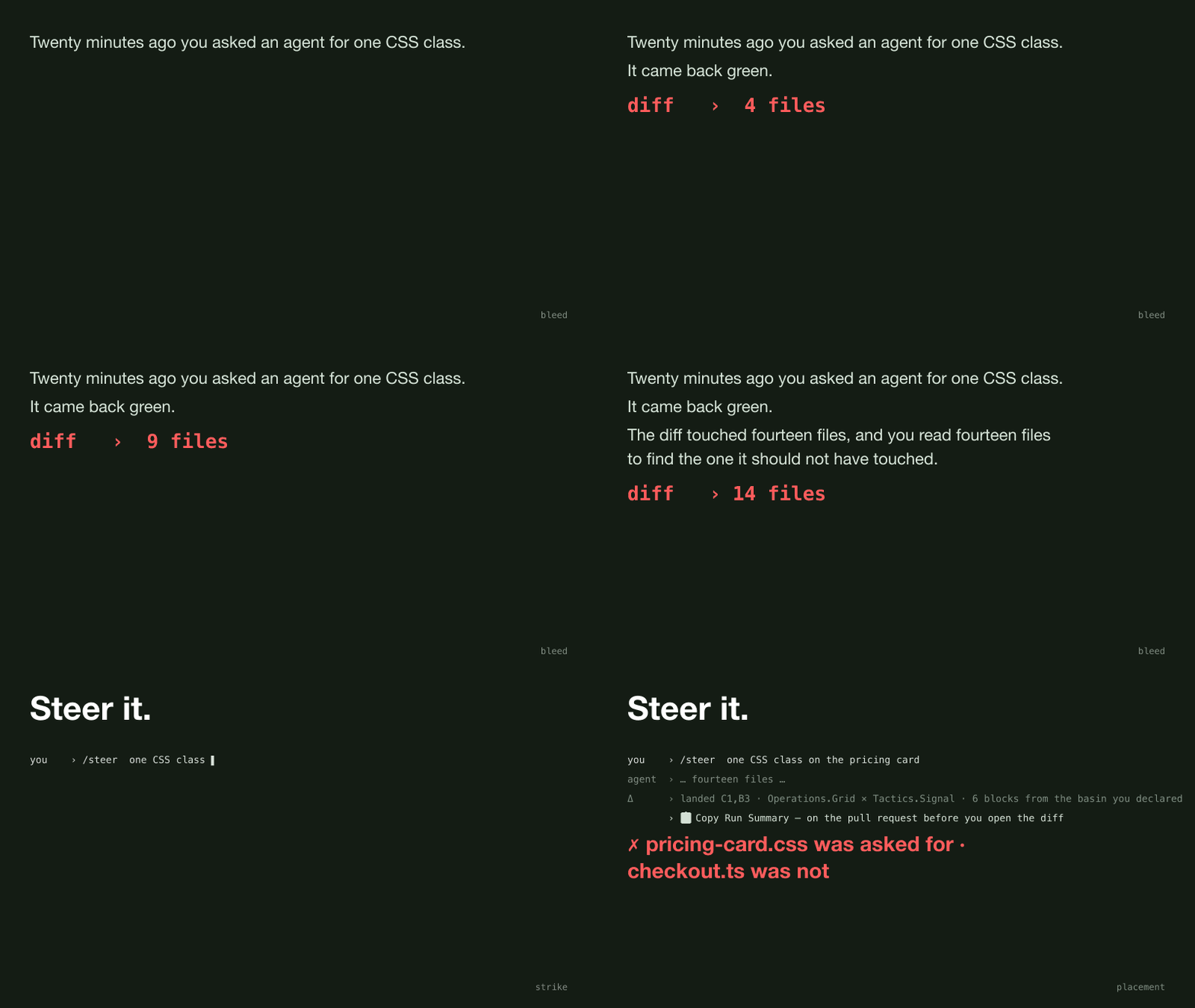


Ask the insurance industry why they will not insure AI.
Jump as high as you can. Your legs supply the push; the floor decides how much of it becomes height, and nobody jumps off sand. An AI budget is that jump, standing on sand: the deployer cannot fund a rollout nobody can price, and the underwriter cannot price what nobody measured, so the same deal stalls on both desks. The sovereign asks whether: a licence, a pause. The market asks what: where the work landed against what was declared, and only that can be poured as a floor — a coordinate with a receipt.
Your strongest engineer will defend your AI this week by calling it deterministic, to reassure the room. It will work, and everyone will move on.
“Our systems are deterministic.”
They are. Completely. Same weights, same seed, same sampler — the same output, every run. Determinism is a property of the replay. Autonomy is the part where nobody fixed the input. You can replay yesterday. Nobody has ever replayed tomorrow.
When it goes wrong, the loss lands on the company. Whether oversight was even possible lands on you — and it is the first question your insurer asks.
Today’s chapter is the mechanism under that sentence.
The Floor and the Ceiling
An objection arrives here and it comes from the engineers rather than the lawyers. If the placement is decidable, and it is computed before the write lands, then it can be wired to a switch: off-lane, stop. That is correct. It is a few lines of code, the gate is open source, and nobody needs permission to write them. The capability is not in doubt, and denying it to sound careful would be a lie told for the sake of modesty — the kind that costs more than the overclaim it was meant to avoid.
Intervention has always been available to exactly the extent that the thing being decided is decidable. A car brakes for closing distance and for the lane edge; no car has ever braked because the route was unwise. The first is a measurement and the second is a judgment, and the machinery has never once confused them — which is why automatic braking shipped and automatic wisdom did not. That boundary was settled in vehicles decades ago. What did not exist, until placement became decidable, was a lane edge for meaning. The instrument is not the brakes. It is the lane edge, and until now meaning had none.
So two objects come off the same computation and only one of them is for sale. The floor is the receipt, and what it buys is the end of being guilty by default, which is the whole of what a court has ever asked a captain to produce. The ceiling is whatever the holder wires it to, up to and including a halt, and the ceiling is theirs. The relation is the one a telematics dongle has to a driver: the dongle never stopped anybody leaving the road, and it is still the thing that moved the premium. Not because measurement is a weaker form of control. Because a policy can attach to a measurement and cannot attach to a promise.
So the question the record answers is not the question anyone wanted answered. It is the one left standing after 1953 and Theorem 2.8.1 have each taken theirs, and it is where the liability goes — not because it belongs there, but because there is nowhere else in the chain for it to attach.
You give: The question you wanted settled — was the agent's work good, and what exactly did it do?
You get: The question that survives both theorems — was there a record the agent did not write — and a timestamp where the jury used to be.
Meta vector — what this section's idea rests on, and what rests on it.
🟠F8🛣️ The Road Came With a Policy (Countable Before Accountable) ↓ — what defines it
9 ⚪I2✅ Verifiability — the count is read from a record a stranger can recompute, not one the actor wrote
8 🟠F4✅ Verification Cost, Priced Per Crossing — per-crossing counting is the frequency half of the price
7 ⚪I7🔍 Transparency — the placement is on the record before the claim arrives
🟠F8🛣️ The Road Came With a Policy (Countable Before Accountable) ↑ — what it causes
9 🟤G3🌐 N² Network Cascade — adoption follows insurability: the roads were built on top of the policy
8 ⚪I6🤝 Trust — a counted record is trusted without trusting whoever wrote the work
Each entry is a glossary address — colour prefix, ShortLex rank, the concept's own emoji last, linked to its definition; weights run 9 (critical) to 1 (weak).
Refined for Book Club 2026-09-29 — "The Floor and the Ceiling".
They were being precise. The person who said it is not being loose; they are being precise.
Now read their own sentence back and notice what it says. It says the machine repeats itself. It does not say the machine does what you asked. Anyone who has written a line of code has watched a deterministic program crash, loop forever, corrupt the table and halt on the wrong branch — identically, every run, exactly as designed and nothing like intended. Determinism has never once meant a system is under control. It just means it does the exact same thing twice.
And there is a smaller sentence hiding inside the big one. What is a deterministic autonomous agent, exactly? Fix the weights, the seed and the sampler, and the same input returns the same output; the input is the part nobody fixed. Its input is the morning — an inbox that moved, a file rewritten under it, a tool that answered differently than it did on Tuesday.
When you hear those two words in the same breath, pay attention. It is the most reliable tell in the room that somebody has been asked for a guarantee nobody can give and has reached for the nearest word that sounds like one. They are usually the strongest engineer in the building, which is precisely why the sentence goes unchallenged.
The computing sense is the version you can prove with your logs. The English sense — predictable, under control, will do what we intended — is the version the audit committee and your regulator are reading out of those same logs.
Lorenz settled it in 1963 with a weather model that was fully deterministic and, past a horizon, unpredictable in principle. The two determinisms · the river is the prompt. Determinism reassures a room rather than confusing it — and that is what makes it the expensive word.
You just read where the eviction is held: in the slot, at the clock of the write. Your logs were written afterwards, by the thing they are about. That is where the law starts.
Am I personally liable for what my agents did?
The financial loss lands on the company. The question of whether effective oversight was even possible lands on you.
That phrase — effective human oversight — is the one the EU AI Act turns on (Article 14). The Act lists what the overseer must be able to do; it draws no line for when that bar is met. The line will be drawn the way every such line is drawn: by the first people who have to argue about one. There are two roads out and no third.
If effective oversight was possible and you did not have it, that is the easy case. Your insurer declines for negligence.
If effective oversight was impossible — if nothing you owned could have told you where that agent went — then you were never in a position to be responsible for it. And an owner who cannot be responsible is not given command of an asset. The liability has your name on it.
You are the captain. The crew is autonomous. No underwriter in three hundred years has asked a captain for a better crew. They ask for the logbook — the record the crew does not get to write after the fact.
The sentence to hand your risk officer: “An agent incident is any action outside the lane declared before the run, counted from a record the agent did not write.”
The logbook costs $20 a year per agent. Seal it, or hold the liability unrecorded. Buy the stamp →
You already have a control environment, and it is not a bad one. The prompts are versioned. The models are pinned. The eval suite runs in CI and goes red when it should. Every action the agent takes is written down with a timestamp and retained for seven years. Ask the industry what more you could possibly do and you get a longer version of that same list.
There is one property that list does not have, and no amount of doing it better will add it. Every record on it was produced by the process it describes. The agent reports its own actions. The eval was written by the team that wrote the thing it grades. An account of a run, produced by that run, cannot contain what the run never noticed — and that is not a claim about anybody’s honesty. It is a claim about where the account came from.
Which is an old problem with an old answer. Double-entry bookkeeping (1494) never asked a merchant to be honest — it made the books check themselves, every debit against a credit. The audit that grew up around it added the part that matters here: a second hand that did not write the first entry. That requirement is why a stranger will lend you money. Your AI keeps one book. So does everyone’s.
The industry’s answer is to build better first entries: more evals, more guardrails, another model watching the first one — each of them written from inside the same boundary as the thing it watches. We went the other way and put the instrument on the far side of it, so the record is one the agent did not author. That is the entire difference, and it is why the claims that follow sound outlandish coming from a small shop. It is not cleverness. It is where the instrument is standing.
And if it is wrong, it is wrong in one specific place, so here is the sentence to swing at. Name one record in your stack that was not produced by the thing it is about. Reply with it and you have taken this apart in public — and we will publish that you did.
Every square on the grid is a crossing: one row meeting one column. The walk starts at the square your declaration names and runs along its row to the eleven squares that share it, then turns down each of their columns, then along those squares' rows again — row, column, row, column — each step counting for less than the one before, so near squares glow and far ones fade. Run it on what you declared and you get the first picture. Run it on the code that shipped and you get the second. Same arithmetic, same bytes, the same picture every time you rerun it. Each commit's panel is kept with a signed row on the walk tape naming the commit, the hash of the text walked, and the hash of the exact binary that walked it — so the picture can be redrawn and compared, byte for byte. That is how the walk stops the dictionary problem — every word defined by more words — in practice: a meaning ends at an address on the grid, not at another word. Where the two clouds disagree is the red in the commit panel further down. The walk is open source, MIT, and runs on your own machine: github.com/wiber/thetacog-mcp — the README carries all six panels.
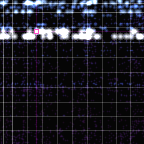 The walk on what you declared |
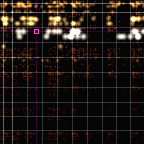 The walk on the code that shipped |


Insurance never prevented a single fire; it made fire a number. Your logs already say something happened — what they do not say is whether it was allowed.

And here is today's receipt — the one behind the actual work that shipped in this repo today, not a mockup: post(blog): a-named-lever-is-a-handhold round 3 — the word coercion arrives bounded (nothing halts, nothing is withheld, a row exists and he was told first), the filing date narrowed to what a filing does, the fork sentence made unambiguous, the licence claim narrowed to the code, the denial in ¶14 replaced by the test, the underwriter's asks answered on the page (application number, a public sample row, the honest absence of a named carrier) (2026-09-17). GREEN is in lane. AMBER is the bleed, one square out. RED is out of lane, and the circles mark where it clustered. The lane is a line somebody declared before the run; the placement is what the walk measured; the colour is only the two meeting. You do not have to read the math. You have to notice that the square where it left its lane has an address, and an address is countable — a count is the frequency half of a price, and the lane you declared is the severity half.
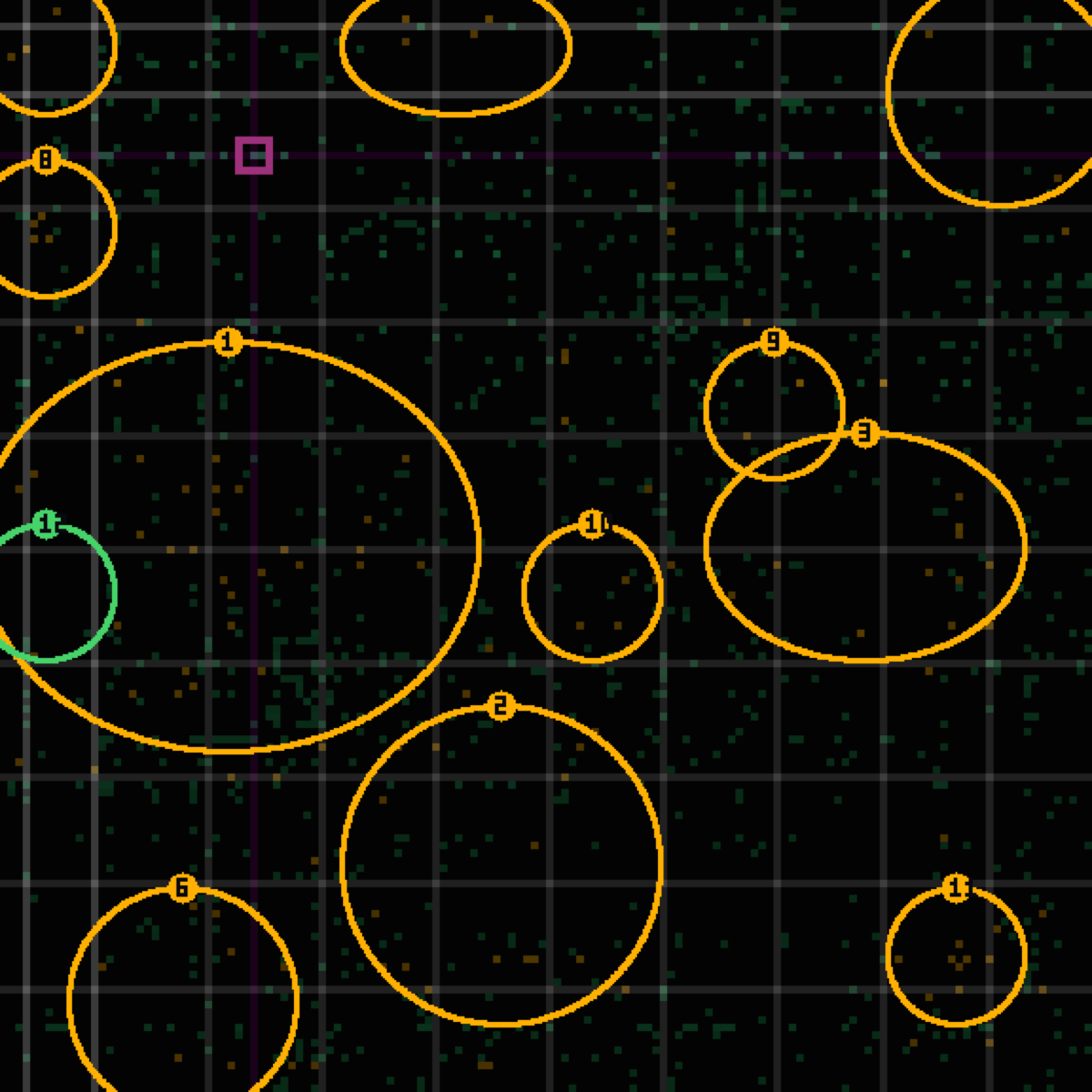
Open this commit's attestation — verify it yourself →
Why we believe this matters: the difference between what a system says it is doing and what it is doing has weight — that gap is where every AI failure and every uninsurable liability lives. But the same measurement, read the other way, is the most personal thing in the book: it means you are not about to be averaged out by a generalist. That is what today's passage was doing, and it is why the receipt above exists: the gap is measurable, so it is priceable.
Rice’s theorem says nobody can prove your agent is good. We have never claimed to. We made where it went countable instead — and there are two doors on the next page, only one of them yours.
Yes. A decidable, still-semantic spec boundary for every autonomous deterministic AI agent.
If it’s debatable, it’s not insurable. If it’s not insurable the roads don’t get built, so the cars don’t get better either — for every semantic case that actually matters.
And because this is the business of AI: buy at iamfim.com. You will sleep like a baby. For the discerning sceptic — fork github.com/wiber/thetacog-mcp and redpill your CLI in far fewer than twenty-one questions.
What does this mean for me? →
Markets do not underwrite safety. They underwrite checkability. The count is live.
1764 ships Lloyd’s Register grade condition, not seaworthiness → cargo underwritten
1866 boilers the inspector’s pass conformance, not safety → factories financed
1903 cars the driver’s licence a bound operator → the road opened
2026 agents ????????????????? ????????????????? → exclusions written
|
The whole argument, on a disc that fits on a laptop lid. It is going to print.
|

We published three of our own bugs and left them open. Fork one, fix it — that is the
entire application. No CV.
|

ThetaCog Steer — VS Code ⇧⌘X, search "ThetaCog Steer" (id thetadriven.thetacog-mcp, free)
One thing it does: a worker boots from the spec row instead of the chat, and the commit gets a second entry the agent did not write.
https://marketplace.visualstudio.com/items?itemName=thetadriven.thetacog-mcp
|
Do you worry about $1.2B in AI liability? If the property is trivial, software can check it — and why are you paying to check trivial properties? If it isn’t trivial, Rice’s theorem says nobody can. So we fixed the math.
The one thing that actually helps: hit reply. A reply is the only
move a mail provider counts as a human being — it is what puts the next one in your inbox
instead of a tab. Type anything: a correction, an idea, one word.
|
thetadriven.com/book
ThetaDriven · Elias Moosman · elias@thetadriven.com