You don’t have to trust me. Ask the insurance industry why they will not insure AI.
In finance the word is alpha — an unfair contact with reality, and it is upstream of everything else
Somebody is going to try to defend you this week by saying your AI is safe because it is deterministic. It will be said to reassure a room, it will work, and everyone will move on.
“Our systems are deterministic.”
They are. Completely. Same weights, same seed, same sampler — byte-identical output, every run. The person who said it is not being loose; they are being precise.
Now read their own sentence back and notice what it says. It says the machine repeats itself. It does not say the machine does what you asked. Anyone who has written a line of code has watched a deterministic program crash, loop forever, corrupt the table and halt on the wrong branch — identically, every run, exactly as designed and nothing like intended. Determinism has never once meant a system is under control. It just means it does the exact same thing twice.
The computing sense is the version you can prove with your logs. The English sense — predictable, under control, will do what we intended — is the version the audit committee and your regulator are reading out of those same logs.
Lorenz settled it in 1963 with a weather model that was fully deterministic and, past a horizon, unpredictable in principle. The two determinisms · the river is the prompt. Determinism reassures a room rather than confusing it — and that is what makes it the expensive word.
Am I personally liable for what my agents did?
The financial loss lands on the company. The question of whether meaningful oversight was even possible lands on you.
That phrase — meaningful human oversight — is the one the EU AI Act turns on, and it is not defined anywhere in the Act. It will be defined the way every undefined standard is defined: by the first people who have to argue about one. There are two roads out and no third.
If meaningful oversight was possible and you did not have it, that is the easy case. Your insurer declines for negligence.
If meaningful oversight was impossible — if nothing you owned could have told you where that agent went — then you were never in a position to be responsible for it. And an owner who cannot be responsible is not given command of an asset. The liability has your name on it.
You are the captain. The crew is autonomous. No underwriter in three hundred years has asked a captain for a better crew. They ask for the logbook.
“The small helm -- the light hand that steers a running system by touching almost nothing -- has to feel the edit.”
The Compression Witness
The small helm -- the light hand that steers a running system by touching almost nothing -- has to feel the edit. A gate that grounds identity -- the check that a change came from who the record says it came from -- is worthless if it cannot tell you where the change landed. So we built the test no one builds: edit one thing in one place, and ask the instrument to point at the address. Not "did something change" -- every monitor answers that. The harder question. Which of the hundred and forty-four zones did this perturbation touch, and how unlikely is it that the instrument guessed right by luck?
We measured luck in sigma. The instrument's own significance bands: under one is chance, one to three is weak, three to six is localized, six and up is outstanding. A controlled edit -- a document about brain surgery, every instance of brain surgery rewritten to plumbing -- should light one zone and leave the other hundred and forty-three dark. We ran four different lenses at the same edit and let them fight.
Three of the four lost honestly. Mass smeared. The whole-document difference field -- raw bulk of changed text, no addressing -- spread across a hundred and ten of the twelve-by-twelve blocks and ranked the true zone thirty-eighth of a hundred and forty-four -- sigma 0.61, chance. The edit was real; the mass could not find it. Rank-per-tile refuted. Asking each tile to vote its own position gave sigma 1.27, weak -- a uniform draw could match it. Claim attribution aimed but did not land. Sense only the claims that actually changed between the two documents, and the target zone climbs from thirty-eighth to second -- directional, sigma in the low fives, but still a second lens, never the verdict.
Then the fourth lens won, and it won by an instrument no one in this field reaches for. The compression witness. Take both sides of the edit, assign every claim to its nearest of the hundred and forty-four anchors, and compress -- gzip -- the claims that land in each zone. Where the edit touched, the two sides' compressed lengths diverge; where it did not, identical strings compress identically and the reading is exactly zero. How far the lengths pull apart, measured against the same population of anchors, is that zone's score. On the living yardstick -- the benchmark pair that regenerates whenever the seed library changes; more on that below -- the champion read sigma 8.85 -- outstanding -- with the target zone ranked second and only a handful of zones nonzero at all. One edit read 19.01. The mass could see nothing; the compression witness saw a single bright address.
This is Cilibrasi and Vitányi's clustering-by-compression, pointed inward at our own substrate. Two strings that share structure compress together more than they compress apart; the savings is the shared meaning. One condition, and it cost more work than anything else on this page: compression only reads meaning through a matched aperture -- the two sides must arrive at the same size-order, the same anchor mass bulked onto each, or the arithmetic measures length instead of meaning. We did not invent the principle. We aimed it at the one question that matters here -- where did the edit land -- and the principle answered with an address. And the instrument is not a description: it ships in the same open repository as this book -- scripts/pmu/sigma-localize.mjs in github.com/wiber/thetacog-mcp -- so the numbers on this page are re-runnable, not quoted.
Say the quiet part, because a fair reader will ask it: is this whole thing just a compression trick? The compression is only the reading of the needle. The anchors it scores against are not labels -- they are positions, addresses the ballistic leaf walk traverses on the chip, row to column to row, each definition resolving to a place instead of to another word. That is what halts the dictionary problem -- words defined by words defined by words, the regress no semantic system stops on its own -- and it is why a zone can be scored at all: you cannot compress your way to an address you never had. The walk grounds; the witness reads. Take either away and the other is a party trick.
Why we trust the number, and why you should distrust it first. A high sigma proves nothing if the test can be gamed, so we removed the ways to game it, one at a time, before we believed it ourselves.
The predictions were registered before the run. We wrote down which zone the edit should light and what each lens should do, then ran. The physics even named the lever in advance: the correlation between an edit's measured response and the orthogonality of its neighboring zones came in at minus 0.91 -- redistribute the seeds toward orthogonality and the instrument's sensitivity rises, exactly as predicted.
The controls read exactly zero. On every lens, on every run, a no-op pair -- a document compared against itself -- reads precisely zero. Not small. Zero. An instrument that finds signal in nothing is an instrument that finds signal in everything; this one finds nothing in nothing.
The yardstick regenerates with the seeds. The test pair is keyed to the hash of the seed library. Change a seed and a new test is minted -- staleness is impossible by construction. We know this works because the stale pair, read against a library it no longer matched, returned minus 1.26 -- possible because sigma is not a raw compression distance, which can never fall below zero, but the target zone's standing against the other hundred and forty-three: how many spreads it sits above their median. A stale pair sits below it. The disease announced itself. A measurement that can read negative when it should read nothing is a measurement that is not lying to you.
The estimator fails conservative. When an edit lands in a single zone so cleanly that the surrounding population has no variance, a naive reading collapses to zero -- the instrument calling its own bullseye a miss. We closed that gap: a surgical hit now reads its exact placement significance, the median across the panel rising from zero to 2.46. The bias we left in points the safe direction. An outlier elsewhere deflates our sigma. We would rather under-claim and be believed than over-claim and be caught.
The circularity is broken by an outside witness. The synthetic pair derives from the seed, so a self-consistent piece of junk could still "localize" to its own junk. So we ran the same instrument on a real, committed repository paragraph -- text the seed had never seen -- and the compression witness read sigma 4.33. Localized, on prose from outside its own loop.
How it scales from one edit to the whole hand. A single bright address is an anecdote. The claim is a distribution. We swept twelve independent edits and asked: across the whole panel, how unlikely is it that the instrument keeps landing in the top three of a hundred and forty-four? Nine of the twelve edits moved their target and ranked it third or better; the worst surviving hit sat at rank three of a hundred and forty-four. The joint, conservative reading -- the binomial against a uniform null -- is sigma 7.29. Not one lucky address. A hand that keeps finding the right address.
And the family law underneath it all -- the rules the anchor tree itself is grown by: each leaf a unique atom mined from the whole repository, each parent an honest summary of its children, siblings pulled apart until they are orthogonal -- halved the misses from seven to three and doubled the outstanding readings. The instrument got better because the ground got better, not because the gate got cleverer. Constrain the substrate; free the agent. The compression witness is what the freed agent uses to check that the floor is still where it left it.
You give: the comfort of a monitor that says "something changed" and points everywhere at once.
You get: an instrument that points at one address, reads zero when nothing happened, reads negative when it has gone stale, and survives its own refutations -- the small helm, proven to feel the edit.
<!-- metavector:the-compression-witness -->
> Meta vector — what this section's idea rests on, and what rests on it.
>
> 🟠F7📊 Compounding Verities (Truth Compounds When Symbols Fixed) ↓ — what defines it
> 9 🟢C7🔓 Freedom Inversion — fixed ground enables compounding
> 9 🔴B5🔤 Symbol Grounding Failure — grounding prevents drift
> 8 🟢C2🗺️ ShortRank Addressing — coordinates are the fixed anchors
>
> 🟠F7📊 Compounding Verities (Truth Compounds When Symbols Fixed) ↑ — what it causes
> 8 🔴B3💸 Trust Debt / The Scrim — compounding verities are opposite of trust debt
> 7 🔵A2📉 k_E = 0.003 — fixed coordinates prevent drift
> 9 🟠F1💰 Trust Debt Quantified — compounding verities recover this waste
> 8 🟢C9🗜️ Compression Witness — fixed symbols repeat, so shared structure compresses — the witness can only localize because verities compound at stable addresses
>
> Each entry is a glossary address — colour prefix, ShortLex rank, the concept's own emoji last, linked to its definition; weights run 9 (critical) to 1 (weak).
> Refined for Book Club 2026-08-28 — "The Compression Witness".
<!-- /metavector:the-compression-witness -->


Insurance never prevented a single fire; it made fire a number. Your logs already say something happened — what they do not say is whether it was allowed.
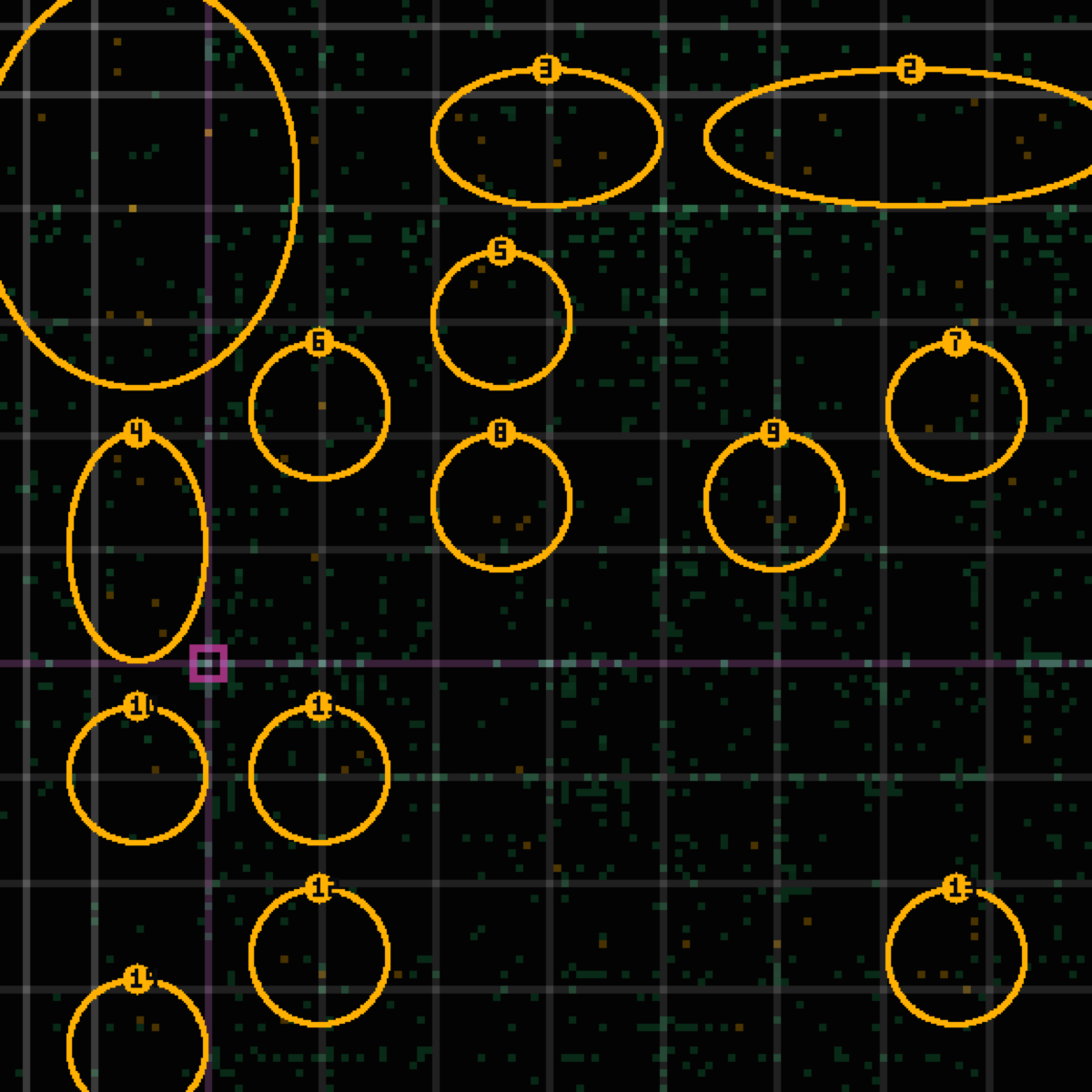
And here is today's receipt — the one behind the actual work that shipped in this repo today, not a mockup: blog(cook): the repo is the policy — the full client vision, zero translation (v1, subagent-drafted, predictions committed first) (2026-08-14). INTENT (cyan) against REALITY (amber); the red is the drift, and you can see exactly where it sits.
Open this commit's attestation — verify it yourself →
Why we believe this matters: the difference between what a system says it is doing and what it is doing has weight — that gap is where every AI failure and every uninsurable liability lives. But the same measurement, read the other way, is the most personal thing in the book: it means you are not about to be averaged out by a generalist. That is what today's passage was doing, and it is why the receipt above exists: the gap is measurable, so it is priceable.
Rice’s theorem says nobody can prove your agent is good. We have never claimed to. We made where it went countable instead — and there are two doors on the next page, only one of them yours.
What does this mean for me? →Markets do not underwrite safety. They underwrite checkability. The count is live.
1764 ships Lloyd’s Register A1 condition, not seaworthiness → cargo underwritten
1866 boilers a stamp on the metal conformance, not safety → factories financed
1903 cars the driver’s licence a bound operator → the road opened
2026 agents ????????????????? ????????????????? → exclusions written

|
Do you worry about $1.2B in AI liability? If the property is trivial, software can check it — and why are you paying to check trivial properties? If it isn’t trivial, Rice’s theorem says nobody can. So we fixed the math.
The one thing that actually helps: hit reply. A reply is the only
move a mail provider counts as a human being — it is what puts the next one in your inbox
instead of a tab. Type anything: a correction, an idea, one word.
|
thetadriven.com/book
ThetaDriven · Elias Moosman · elias@thetadriven.com