
The difference between what a system says it is doing and what it is doing has weight. That gap is where every AI failure and every uninsurable liability lives, and the gap can be measured, so it can be priced. Read the other way, the same measurement is personal: you are not about to be averaged out by a generalist.
Next time you wonder how to help, tap the sticker. The sticker carries the word to the next signer.
A word from a peer gets read. The same word from a vendor gets filed.
▶ Hear the case in four minutes (3:59) → Take 78, recorded on my phone. Rooms that want the talk book it at thetadriven.com/speaker.
I was offered a few minutes at the Royal Institution on 10 November, in the Faraday Lecture Theatre, and I am grateful for it: recognition is exactly what this work needs right now. One evening does not carry a transatlantic flight, so my seat is pending. If you know a room in London that week that would hear the talk, forward this email to whoever runs it. One more room and I am on the plane.
The market agrees. From January 1, 2026, the standard liability forms let insurers exclude generative AI outright (ISO CG 40 47, CG 40 48, CG 35 08). Insurers won't carry what they can't count. We sell the count.
No highways before insurance: uninsured roads never get built, and the cars never improve.
If you sign for an agent: Whether it was good is undecidable (Rice, 1953). What it actually did cannot be reconstructed from its own account (the data processing inequality). The only remaining move is to read a record the actor did not write.
You would be forgiven for calling an answer to that impossible. What we did, and how it holds, follow the book.
Ask the insurance industry why they will not insure AI.
Jump as high as you can; nobody jumps off sand. An AI budget is that jump, standing on sand: the deployer cannot fund a rollout nobody can price, and the underwriter cannot price what nobody measured, so the same deal stalls on both desks. The sovereign asks whether: a licence, a pause. The market asks what: where the work landed against what was declared, written down as a receipt anyone can check. Only that can be priced.
Your strongest engineer will defend your AI this week by calling it deterministic, to reassure the room. The word will work, and everyone will move on.
“Our systems are deterministic.”
They are. Completely. Pin the weights, the seed, the sampler and the batch — the same output, every run. Every step obeys; where the steps end up is undecidable (Rice, 1953). Determinism is a property of the replay. Autonomy is the part where nobody fixed the input. You can replay yesterday. Nobody has ever replayed tomorrow.
An agent’s loss lands on the company. Whether oversight was even possible lands on you (EU AI Act, Article 14).
Today’s chapter is the same mistake, made by a whole field for sixty years.
Chapter 10: Natural Experiments — When Humans Beat the Metrics
The metrics said "launch." The math said "certain." Soviet doctrine said "retaliate."
Petrov's cortex said: "The math is divorced from reality."
He trusted substrate over metrics. He saved the world.
McNamara trusted his metrics. A generation died in the jungle.
The experiments are done. The data is in. The only open question is whether you will use it.
The Transaction [←,,,, ]
You give: the comfort of theory. The belief that this only happens in history books.
You get: five field reports. Five domains. The measurement already done.
Nature already ran the test. This chapter reads the verdict.
The network scaled. Chapter 9 proved that N-squared verification events compound with every node -- the architecture holds, the math is clean, the geometry propagates. But scale is not safety. A network that scales noise instead of signal compounds the wrong thing at the same exponential rate. When the consensus demands compliance and the substrate says halt, the architecture does not answer. A person does. One node. Against an entire system screaming proceed.
Five natural experiments. Five domains. Five scales. One prediction tested against field data every time: when surface metrics and substrate signal diverge, which one proves correct?
Petrov at the nuclear console. Sully in the cockpit. Traders at Lehman. Patients in the placebo ward. McNamara in the Situation Room.
In each case, the metrics said "optimize." The models said "success." The systems said "proceed." In each case, the answer lay in the substrate -- visible only to the organism with the measurement precision to detect it.
When the math says one thing and your gut says another --
your gut is detecting drift the metrics cannot measure.
That gut is the oldest verification instrument on Earth. Autocoincident — the record is the event. No witness. No separate log. The state is the history, and the history is the state. The gap between the metric and the ground behaves like a Casimir surface. Meaning has weight. The physics of identity is the physics of trust.
You already own this instrument. The 3 a.m. stomach-drop before the numbers catch up. The deal that pencils out on every slide and still feels wrong. The hire whose references check out and still sets something off. You did not open a spreadsheet for that. The deal arrived at a coordinate that was already holding something -- the counterparty you built across every prior call -- and a coordinate holds one occupant. The arriving version either matched what was there or put it out into your hand. The stomach-drop is the old one, in your hand, not matching the slide. The write and the audit were one event; what came out is the receipt. Your body held the mismatch before your cortex finished the paperwork. Petrov's version of that same instrument ran world history through it.
Read this in the book, in context →
Meta vector — what this section's idea rests on, and what rests on it.
🟣E4🧠 Consciousness Proof (You ARE the Proof) ↘ — what defines it
9 🟢C1🏗️ Unity Principle (S≡P≡H) — semantic position IS physical position, in meat
9 🟡D2📌 Physical Co-Location (Semantic Neighbors) — co-located assemblies bind inside the window
8 🔵A5⚡ M 55% Metabolic Coordination Cost — the price paid to stay open to what the model discarded
7 🟣E1🔬 Legal Search Case — the same architecture, measured outside a skull
🟣E4🧠 Consciousness Proof (You ARE the Proof) ↗ — what it causes
9 🔴B3💸 Trust Debt / The Scrim — the gap you can feel is the gap between your substrate and your systems
8 🔵A2📉 k_E = 0.003 — every boundary crossing is priced, in meat as in metal
7 🟣E4a🧠 Cortex — the organ that chases irreducible surprise
Each entry is a glossary address — colour prefix, ShortLex rank, the concept's own emoji last, linked to its definition; weights run 9 (critical) to 1 (weak).
Refined for Book Club 2026-08-29 — "You ARE the Proof".
“I am the one holding the bag when our AI breaks a client contract. Every change our agents make now carries a receipt the machine did not write, one my carrier can recompute.”
— ______________________________
Would you put your name on this? Would your boss? Would anyone you know?
An agent’s log is words about words, the loop Stevan Harnad named in 1990. Each word points to more words; the chain branches without end and never reaches ground. The field took that runaway as fate. A runaway is only fatal in an open space. Close the space, so every word has a place and nothing is left outside, and the same branching turns into confirmation: many independent paths agreeing on one place. A nerve cell decides the same way inside its membrane: one input proves nothing, and many independent inputs, summed, carry the call. We have been closing that space since the summer of 2000. How the floor is built, and the one condition it rests on, follow further down.
Further down: a photograph of the physical piece and the checks you can run yourself.
A word you never declared has no address, and the receipt says so instead of guessing.
Two ways to prove us wrong, both public: find a definition on the floor that does not stop, or a change written in your own specification's terms that lands outside its lane. Measured: the walk returns the same bytes on a Mac and on Linux, Intel and Arm alike, in an open cross-architecture check anyone can rerun (IntentGuard, tests/cross_arch.rs).
The mathematical proof and the empirical runs follow further down.
We detect, place, price and dispatch. You hold the wheel: the halt is yours to wire. iamfim.com

They were being precise. Not loose. Precise.
Now read their own sentence back and notice what it says. The sentence says the machine repeats itself. The sentence does not say the machine does what you asked. Anyone who has written a line of code has watched a deterministic program crash, loop forever, corrupt the table and halt on the wrong branch — identically, every run, exactly as designed and nothing like intended. Determinism has never once meant a system is under control. Determinism means the system does the exact same thing twice, given the exact same input. Change that input by the width of a butterfly’s wing and a deterministic system can end somewhere else entirely: Lorenz showed it in 1963 with a weather model that was fully deterministic and, past a horizon, unpredictable in principle. Deterministic chaos is still determinism.
And there is a smaller sentence hiding inside the big one: a deterministic autonomous agent. Its input is the morning — an inbox that moved, a file rewritten under it, a tool that answered differently than it did on Tuesday.
When you hear those two words in the same breath, pay attention. Those two words are the most reliable tell in the room that somebody has been asked for a guarantee nobody can give and has reached for the nearest word that sounds like one. The speaker is usually the strongest engineer in the building, which is precisely why the sentence goes unchallenged.
The computing sense is the version you can prove with your logs. The English sense — predictable, under control, will do what we intended — is the version the audit committee and your regulator are reading out of those same logs.
The long form: The two determinisms · the river is the prompt. Determinism reassures a room rather than confusing it — and that is what makes it the expensive word.
You just read where the eviction is held: in the slot, at the clock of the write. Your logs were written afterwards, by the thing they are about. That is where the law starts.
Am I personally liable for what my agents did?
The financial loss lands on the company. The question of whether effective oversight was even possible lands on you.
That phrase — effective human oversight — is the one the EU AI Act turns on (Article 14). The Act lists what the overseer must be able to do; it draws no line for when that bar is met. The line will be drawn the way every such line is drawn: by the first people who have to argue about one. There are two roads out and no third.
If effective oversight was possible and you did not have it, that is the easy case. Your insurer declines for negligence.
If effective oversight was impossible — if nothing you owned could have told you where that agent went — then you were never in a position to be responsible for it. And an owner who cannot be responsible is not given command of an asset. The liability has your name on it.
You are the captain. The crew is autonomous. No underwriter in three hundred years has asked a captain for a better crew. Underwriters ask for the logbook — the record the crew does not get to write after the fact.
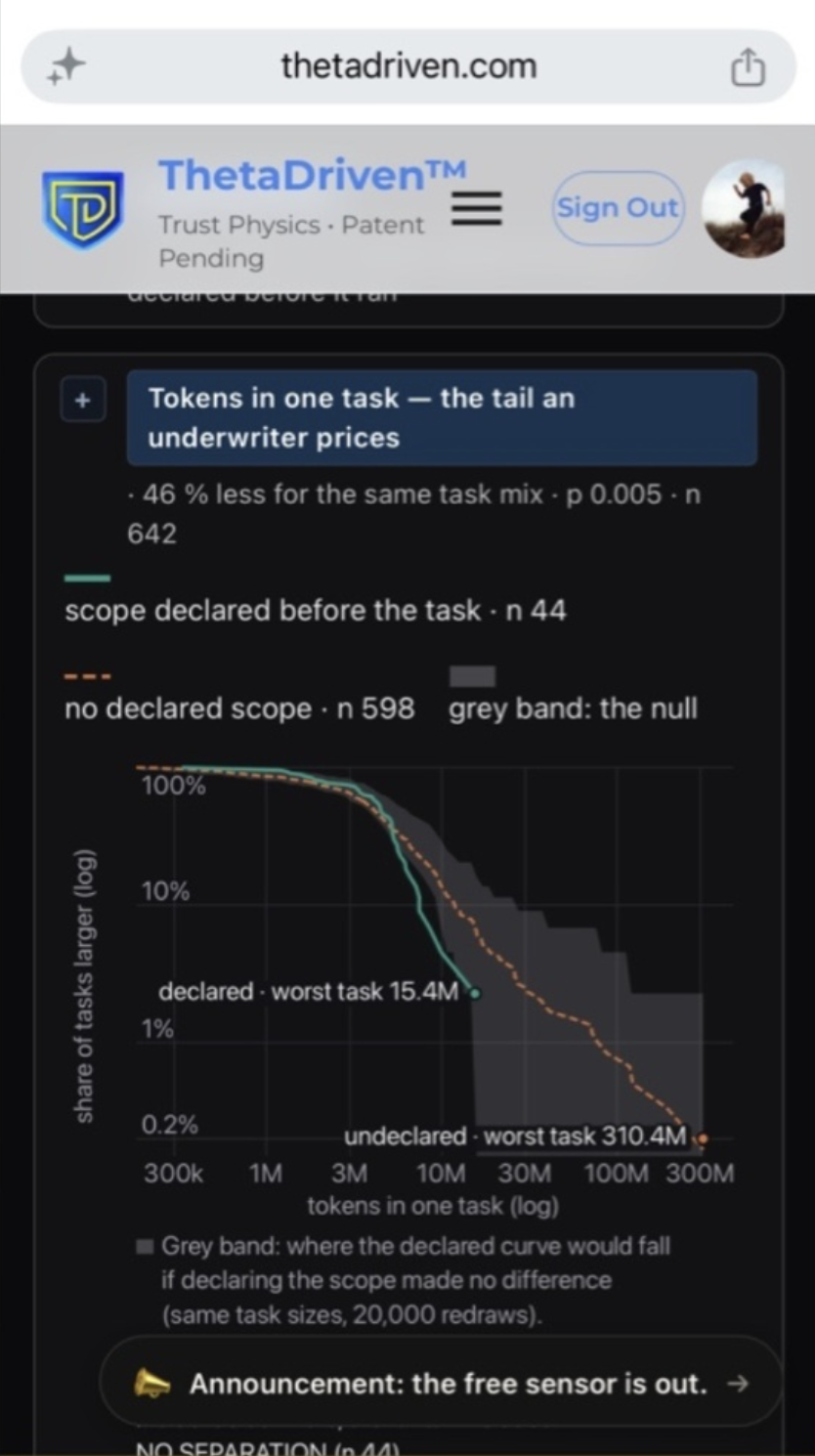
The sentence to hand your risk officer: “An agent incident is any action outside the lane declared before the run, counted from a record the agent did not write.”
The measurement is free. The sealed logbook costs $20 a year per agent. Seal it, or hold the liability unrecorded. Buy the stamp →
You already have a control environment, and it is not a bad one. The prompts are versioned. The models are pinned. The eval suite runs in CI and goes red when it should. Every action the agent takes is written down with a timestamp and retained for seven years. Ask the industry what more you could possibly do and you get a longer version of that same list.
There is one property that list does not have, and doing the list better will never add it. Every record on it was produced by the process it describes. The agent reports its own actions. The eval was written by the team that wrote the thing it grades. An account of a run, produced by that run, cannot contain what the run never noticed — and that is not a claim about anybody’s honesty. The claim is about where the account came from.
Which is an old problem with an old answer. Double-entry bookkeeping (1494) never asked a merchant to be honest — it made the books check themselves, every debit against a credit. The audit that grew up around it added the part that matters here: a second hand that did not write the first entry. That requirement is why a stranger will lend you money. Your AI keeps one book. So does everyone’s.
The industry’s answer is to build better first entries: more evals, more guardrails, another model watching the first one — each of them written from inside the same boundary as the thing it watches. We went the other way and put the instrument on the far side of it, so the record is one the agent did not author. That is the entire difference, and it is why the claims that follow sound outlandish coming from a small shop. The difference is not cleverness. The difference is where the instrument is standing.
And if it is wrong, it is wrong in one specific place, so here is the sentence to swing at. Name one record in your stack that was not produced by the thing it is about. Reply with it and you have taken this apart in public — and we will publish that you did.
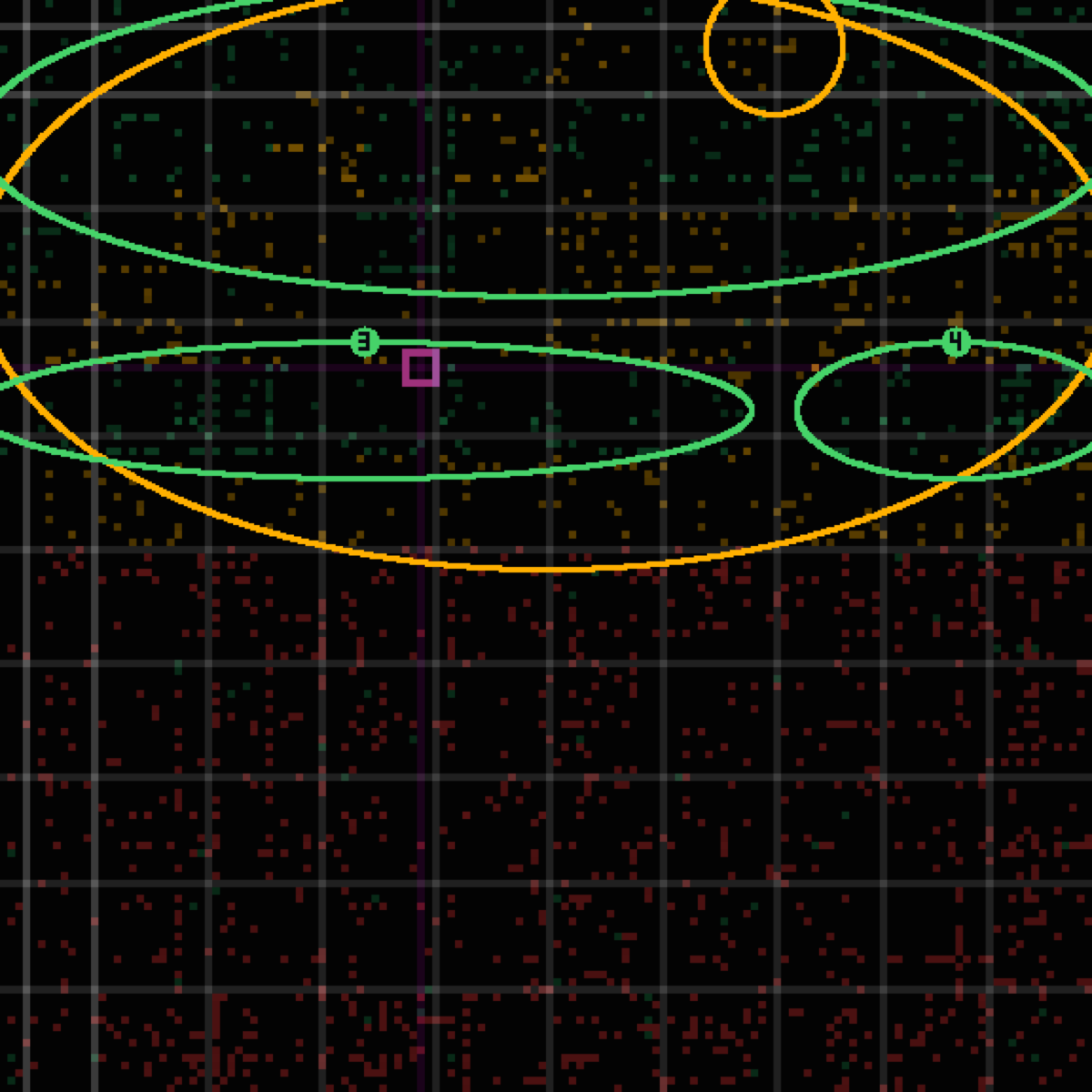
Every square on the grid is a crossing: one row meeting one column. The walk starts at the square your declaration names and runs along its row to the eleven squares that share it, then turns down each of their columns, then along those squares' rows again — row, column, row, column — each step counting for less than the one before, so near squares glow and far ones fade. Run it on what you declared and you get the first picture. Run it on the code that shipped and you get the second. Same arithmetic, same bytes, the same picture every time you rerun it. Each commit's panel is kept with a signed row on the walk tape naming the commit, the hash of the text walked, and the hash of the exact binary that walked it — so the picture can be redrawn and compared, byte for byte. That is how the walk stops the dictionary problem — every word defined by more words — in practice: a meaning ends at an address on the grid, not at another word. Where the two clouds disagree is the red in the commit panel further down. The walk is open source, MIT, and runs on your own machine: github.com/wiber/thetacog-mcp — the README carries all six panels.
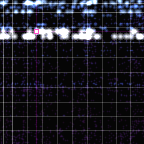 The walk on what you declared |
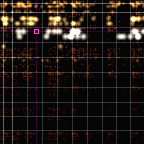 The walk on the code that shipped |

— Elias Moosman
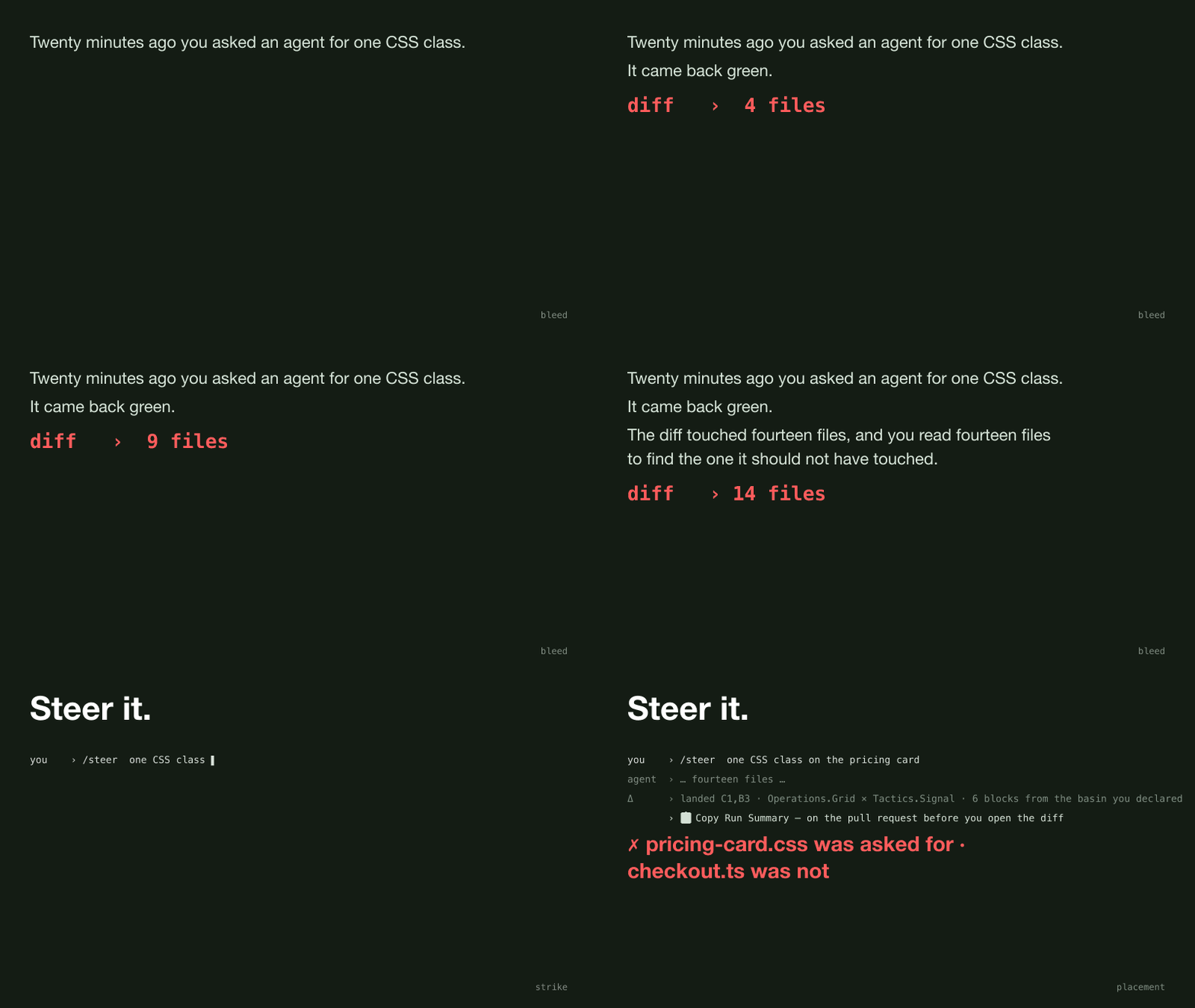


The install and the measurement are free and open-source (MIT); only the financialization/attestation layer is licensed. What a licence buys: the right to run the receipt on an agent in production under US Patent Application 19/637,714. One licence per agent, $20, good for 365 days or 10,000 countersigned receipts, whichever comes first. Each receipt records where that agent's work landed against what it was asked to do, and anyone can recompute it.
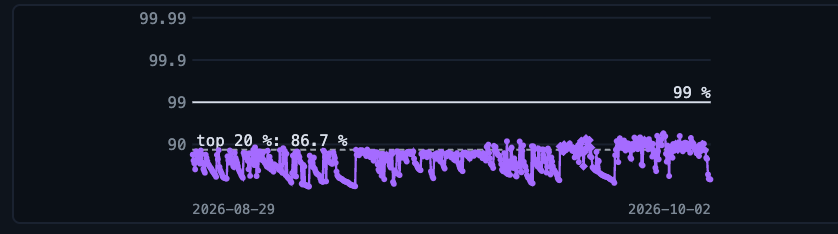
Insurance never prevented a single fire; it made fire a number. Your logs already say something happened — what they do not say is whether it was allowed.
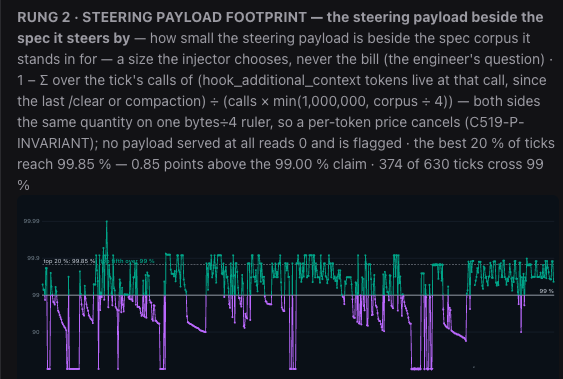
And here is today's receipt — the one behind the actual work that shipped in this repo today, not a mockup: post(blog): the math as the pipeline runs it, and the two-way optimisation that shows the side — the commit as the cost unit with tokens/minutes/calls that refuse to add (KR40 U-1), medians 40,079 tokens / 5.33 min / 12 calls over 621 commits, the price table pinned 2026-09-17 to BLS May 2025 wages and the vendors' published rates (the no-arbitrage step), yield = passes ÷ decidable commits currently 0 on every lane so every per-pass floor prints UNMEASURED with its reason, σ = the top cell's margin over the board in SDs with the shuffled-label null as the zero, and the two-way part: the deployer lowers a swing-priced premium by lowering the measured swing, the carrier lowers its loss ratio on the same swing, the licence is fixed at $20 in either direction — nothing on the seller's side is paid for the drift or for hiding it (both posts) (2026-09-17). GREEN is in lane. AMBER is the bleed, one square out. RED is out of lane, and the circles mark where it clustered. The lane is a line somebody declared before the run; the placement is what the walk measured; the colour is only the two meeting. You do not have to read the math. You have to notice that the square where it left its lane has an address, and an address is countable — a count is the frequency half of a price, and the lane you declared is the severity half.
Open this commit's attestation — verify it yourself →
Rice’s theorem says nobody can prove your agent is good. We have never claimed to. We made where it went countable instead — and there are two doors on the next page, only one of them yours.
Yes. A decidable, still-semantic spec boundary for every autonomous deterministic AI agent.
And because this is the business of AI: buy at iamfim.com. You will sleep like a baby. For the discerning sceptic — fork github.com/wiber/thetacog-mcp and redpill your CLI in far fewer than twenty-one questions.
What does this mean for me? →Markets do not underwrite safety. Markets underwrite checkability. The count is live.
1764 ships Lloyd’s Register grade condition, not seaworthiness → cargo underwritten
1866 boilers the inspector’s pass conformance, not safety → factories financed
1903 cars the driver’s licence a bound operator → the road opened
2026 agents ????????????????? ????????????????? → exclusions written
The question began in a conversation in the summer of 2000; the algorithm followed in 2007 and 2008.
Why a branching chain settles here instead of running away. In an open dictionary every word points to more words and the chain never ends. On the floor every word has a place and the walk only steps forward, so every walk ends: the matrix it runs on is nilpotent. The branching stays. Each place has twenty-two neighbours, and the floor branches far above one. As commits accrue, more and more paths confirm each landing: a cascade past its threshold, the dichotomy Galton and Watson proved for family names. A cascade proves something only if the paths are independent; a million copies of one path confirm one thing once. Inside each block of the floor, children are ranked by their parent’s rule. Where that rule is independent of the neighbours’ (correlation under a tenth), the ranking is a new axis. The book calls that part the resonator. A nerve cell does the same inside its membrane: weak, independent inputs, summed, carry a decision no single input could. Independence is the condition, and the book puts it under test in public rather than assuming it.
On this repository: the latest 150 of 29,694 commits, walked twice on one machine, rerun distance 0. None of the 150 is long enough for the walk to admit, so whether meaning moves a placement is still unmeasured, and we say so here.

|
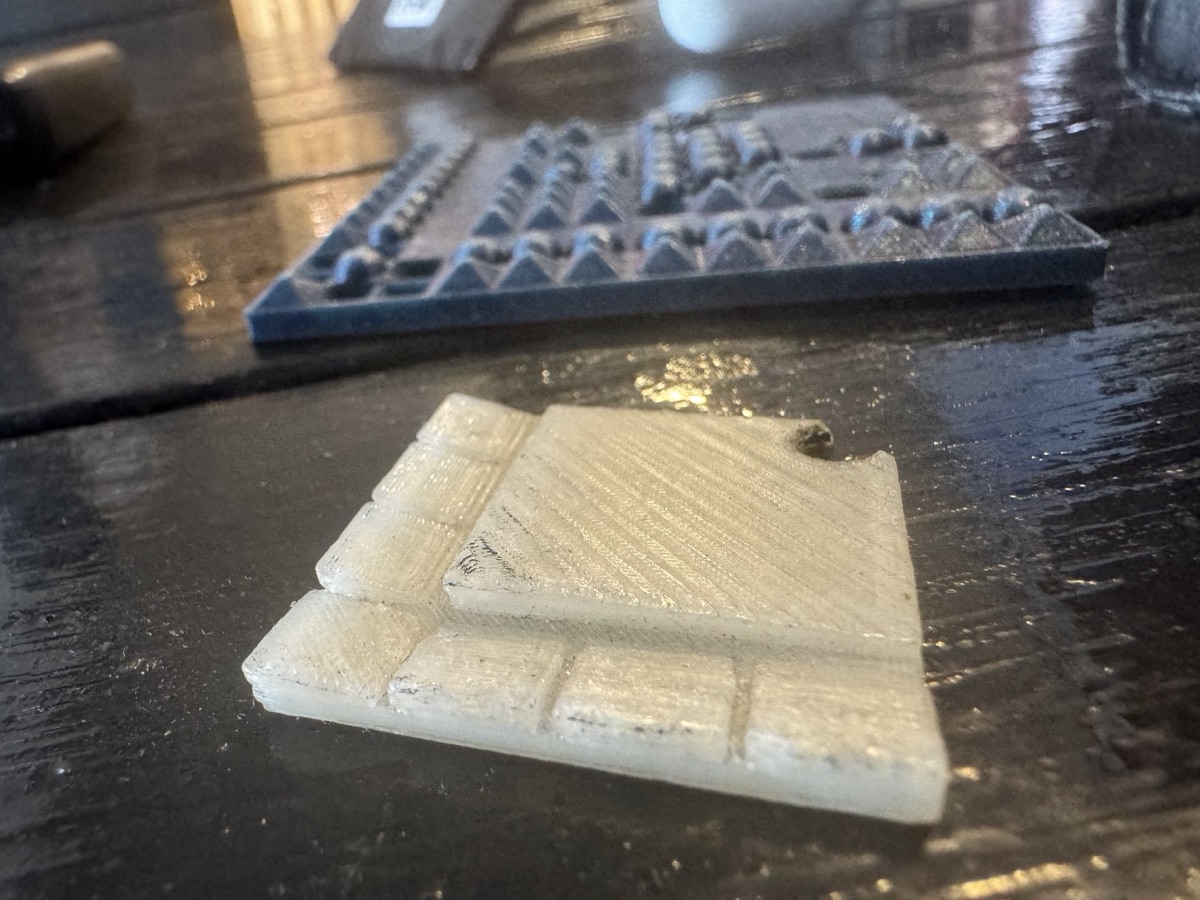
The whole argument, on a disc that fits on a laptop lid. The disc is going to print.
|

We published three of our own bugs and left them open. Fork one, fix it — that is the
entire application. No CV.
|

ThetaCog Steer — VS Code ⇧⌘X, search "ThetaCog Steer" (id thetadriven.thetacog-mcp, free)
One thing it does: a worker boots from the spec row instead of the chat, and the commit gets a second entry the agent did not write.
https://marketplace.visualstudio.com/items?itemName=thetadriven.thetacog-mcp
|
Do you worry about $1.2B in AI liability? If the property is trivial, software can check it — and why are you paying to check trivial properties? If it isn’t trivial, Rice’s theorem says nobody can. So we fixed the math.
The one thing that actually helps: hit reply. A reply is the only
move a mail provider counts as a human being — it is what puts the next one in your inbox
instead of a tab. Type anything: a correction, an idea, one word.
|
thetadriven.com/book
ThetaDriven · Elias Moosman · elias@thetadriven.com