The difference between what a system says it is doing and what it is doing has weight. That gap is where every AI failure and every uninsurable liability lives, and the gap can be measured, so it can be priced. Read the other way, the same measurement is personal: you are not about to be averaged out by a generalist.
Next time you wonder how to help, tap the sticker. The sticker carries the word to the next signer.
A word from a peer gets read. The same word from a vendor gets filed.
▶ Hear the case in four minutes (3:50) → Take 83, recorded on my phone. Rooms that want the talk book it at thetadriven.com/speaker.
I was offered a few minutes at the Royal Institution on 10 November, in the Faraday Lecture Theatre, and I am grateful for it: recognition is exactly what this work needs right now. One evening does not carry a transatlantic flight, so my seat is pending. If you know a room in London that week that would hear the talk, forward this email to whoever runs it. One more room and I am on the plane.
The market agrees. From January 1, 2026, the standard liability forms let insurers exclude generative AI outright (ISO CG 40 47, CG 40 48, CG 35 08). Insurers won't carry what they can't count. We sell the count.
No highways before insurance: uninsured roads never get built, and the cars never improve.
If you sign for an agent: Whether it was good is undecidable (Rice, 1953). What it actually did cannot be reconstructed from its own account (the data processing inequality). The only remaining move is to read a record the actor did not write.
You would be forgiven for calling an answer to that impossible. What we did, and how it holds, follow the book.
Ask the insurance industry why they will not insure AI.
Jump as high as you can; nobody jumps off sand. An AI budget is that jump, standing on sand: the deployer cannot fund a rollout nobody can price, and the underwriter cannot price what nobody measured, so the same deal stalls on both desks. The sovereign asks whether: a licence, a pause. The market asks what: where the work landed against what was declared, written down as a receipt anyone can check. Only that can be priced.
Your strongest engineer will defend your AI this week by calling it deterministic, to reassure the room. The word will work, and everyone will move on.
“Our systems are deterministic.”
They are. Completely. Pin the weights, the seed, the sampler and the batch — the same output, every run. Every step obeys; where the steps end up is undecidable (Rice, 1953). Determinism is undecidable chaos. Determinism belongs to the replay. Autonomy is the part where nobody fixed the input. You can replay yesterday. Nobody has ever replayed tomorrow.
An agent’s loss lands on the company. Whether oversight was even possible lands on you (EU AI Act, Article 14).
Today’s chapter is the same mistake, made by a whole field for sixty years.
What Universal High Income Buys
Elon Musk has a name for the settlement, and it is worth quoting exactly because the precision is his, not mine. At VivaTech in May 2024 he drew the distinction himself: not universal basic income -- universal high income. At the US-Saudi Investment Forum in November 2025 he put a shape on the life it funds: work will be optional, like playing a sport or a video game. Musk is not being stupid and he is not being villainous; he is making the most coherent argument anyone in his position can make. The argument that beats him is not the machines cannot do the work. That argument has lost ground every year for a decade and it will keep losing.
Start with what he has right, because the parts he has right are the load-bearing ones. The wage-to-output map is broken: a wage priced human hours against physical output, and a model now produces the semantic output without the hours. Picture what that output was: the junior analyst at midnight turning forty pages of PDF into six slides, the associate drafting the first memo a partner will rewrite. The roles whose whole product is that output -- a draft, a summary, a first-pass analysis, a schema -- are collapsing, and the collapse is measurable rather than rhetorical. Young workers in the most AI-exposed occupations have taken a sixteen percent relative decline in employment, and the drop lands on the twenty-two-to-twenty-five bracket first. Musk is right that a society which keeps pricing human worth in hours sold will produce a catastrophe on a schedule. And Musk is right that something has to be paid.
Here is the word that does not survive contact: optional. The work does not become optional; the work changes phase. Production becomes verification, and verification is not the absence of labor -- it is the least visible, least creditable, least survivable form of it. Lisanne Bainbridge named this in 1983, before any of the machines in question existed, in a paper about industrial automation that reads now like a memo from the future. The designer who automates everything they know how to automate leaves the human holding precisely the residue that could not be automated: the hard part. The hard part arrives without warning, at the worst moment, to an operator who has had no occasion to practice. Her sentence is the one to carry: a formerly experienced operator who has been monitoring an automated process may now be an inexperienced one. Move her dials onto a screen and nothing changes. A team that lets an agent write the code and keeps a human to review it has rebuilt her control room: the designer automated the typing, kept the savings, and handed the human the panic.
Read that as a pricing failure rather than a human tragedy and it becomes useful. An input with a real cost and a price of zero gets over-extracted -- that is the oldest result in the field, and it holds for fisheries, aquifers, and grounded judgment alike, not because anyone is villainous but because zero is the wrong number and every actor responding rationally to a wrong number arrives at the same place. Attention sends no invoice, so the stock gets drawn down faster than it regenerates. The wear you can see is evidence that the price was wrong, never evidence that the resource was doomed. Bainbridge measured the drawdown rate as well: half an hour is the outer limit of effective attention on a source where little happens. At minute thirty-one the reviewer is still at the desk, still scrolling green checks, approving a change nobody read. No character flaw put them there. A supply constraint did, and a supply constraint nobody has costed is a bill accruing somewhere off the books.
So price the settlement honestly, and notice which way the dependency runs while you do. Universal high income is presented as a dividend -- your share of an abundance the machines produced, arriving because there is more than enough. That framing puts the human on the receiving end of a machine that does the producing, and the decomposition shows the opposite. The model cannot ground itself and never could; no quantity of scale changes the category, because a symbol system has no operation that reaches outside the symbol system. Wiring in a camera, a browser or an API changes the inputs and leaves the category where it was: pixels and JSON arrive as more symbols inside the same perimeter. The model can ingest the sensor; the model cannot be the one who answers for the reading. The grounding has to come from somewhere, and it comes from people, continuously, because the world it describes does not hold still: a price moves, a road closes, a customer changes their mind, and someone in contact with the change has to tell the model. That is a factor of production, not a hardship, and the party who supplies a necessary input on a recurring basis is not a beneficiary. That party is a supplier with an unpaid invoice.
The strongest evidence available is not on my side of the aisle by accident, and it deserves to be stated against my own case first. Sam Altman's OpenResearch ran the largest unconditional-cash study in American history -- a thousand recipients, a thousand dollars a month, three years, pre-registered, checked against administrative payroll records rather than self-report. Money bought agency at the margin: recipients worked slightly less and had more say over their hours, which is a real good and should not be waved off. But the study also asked what the freed hours became, and answered it with the statistical power to rule things out. The time went to leisure. Gains in self-improvement, in job search, in enrolling in education -- each one was not merely unobserved but explicitly rejected at small effect sizes. A thousand dollars a month is not high income, and a fair critic will say so. The amount still tests the direction: if unconditional money bought the drive to build, the effect would show at a thousand dollars, smaller but pointed the right way, and the study ruled out even a small one. That is not a verdict on the recipients, who behaved exactly as anyone behaves when handed hours and no structure. The result is a verdict on the theory. Cash buys hours; grounding is built by contact, and contact is what the arrangement took away. Unconditional income does not restore grounding, because insufficient funding was never what removed it.
Which leaves the arrangement's actual defect, and it is thermodynamic rather than ethical. Parasitism is expensive on both sides of the wire. The parasite pays to extract the variety it cannot generate; the host pays the metabolic cost of being extracted from; and every hop across the boundary between them pays a crossing tax, the irreducible cost of confirming across a border that a decision was made, which Chapter 3 priced at kE = 0.003 per boundary crossing. Then, on top of all of it, the arrangement pays a third fee nobody budgets for -- the compounding cost of a host whose grounding is decaying under exactly the conditions the arrangement created, so that the variety being extracted gets worse each cycle while the extraction rate holds constant. A coupled system pays none of the three; it pays once, at the join. The previous section framed the Grounding Tax as a fee rather than a reparation for exactly this reason: synergy is not the nicer arrangement, it is the cheaper one. Synergy wins by an amount that grows without bound while the parasitic version is still congratulating itself on the savings.
You give: the picture of universal high income as the generous end-state, the dividend a wealthy civilization pays itself once the machines are good enough. You get: the same transfer read as a buyout of the one asset the machines cannot manufacture -- your standing contact with the world -- sold at a price set by the buyer, on the argument that you were not using it anyway.
None of which requires the machines to be worse than they are. That is the part worth holding onto, because the argument does not depend on any prediction about capability and therefore cannot be falsified by the next release. Grant the models everything: grant that they keep improving, grant that scale keeps buying more than the skeptics expect, grant that a world model does condense out of enough tokens. The trade is unchanged, because the contest was never intelligence. Picture the casting call for a nappy advert: a teenager with a 180 IQ applies, and so does a Nobel laureate who speaks six languages, and the baby gets the job because the baby fits the slot (the full story). Contact with the ground is a slot of that kind, and no professor grows into it. A system that is right ninety-nine times out of a hundred and cannot tell you which time was the hundredth still requires someone in contact with the ground to find out, and the settlement on the table pays that someone to leave. The alternative is a market, not a dividend, and the market is possible because every reading of work can land on the same addresses: the record that places an agent's step places a person's step too, every local map stacks into one map of maps, and fit gets matched to work by its shape, agent or person, with no words in between. That market pays the person who fits the slot to stay. The salaried desk was a two-century arrangement for buying that contact by the hour; the contact is older than the desk and outlives it. Optional is the wrong word for what is being made optional. The job was always optional. The grip never was.
Read this in the book, in context →
Meta vector — what this section's idea rests on, and what rests on it.
🟠F7📊 Compounding Verities (Truth Compounds When Symbols Fixed) ↘ — what defines it
9 🟢C7🔓 Freedom Inversion — fixed ground enables compounding
9 🔴B5🔤 Symbol Grounding Failure — grounding provides fixed coordinates
9 🔴B5🔤 Symbol Grounding Failure — grounding prevents drift
8 🟢C2🗺️ ShortRank Addressing — coordinates are the fixed anchors
🟠F7📊 Compounding Verities (Truth Compounds When Symbols Fixed) ↗ — what it causes
8 🔴B3💸 Trust Debt / The Scrim — compounding verities are opposite of trust debt
9 🟠F1💰 Trust Debt Quantified — $8.5T economic impact
7 🔵A2📉 k_E = 0.003 — fixed coordinates prevent drift
9 🟠F1💰 Trust Debt Quantified — compounding verities recover this waste
8 🟢C9🗜️ Compression Witness — fixed symbols repeat, so shared structure compresses — the witness can only localize because verities compound at stable addresses
Each entry is a glossary address — colour prefix, ShortLex rank, the concept's own emoji last, linked to its definition; weights run 9 (critical) to 1 (weak).
Refined for Book Club 2026-11-03 — "What Universal High Income Buys".
“I am the one holding the bag when our AI breaks a client contract. Every change our agents make now carries a receipt the machine did not write, one my carrier can recompute.”
— ______________________________
Would you put your name on this? Would your boss? Would anyone you know?
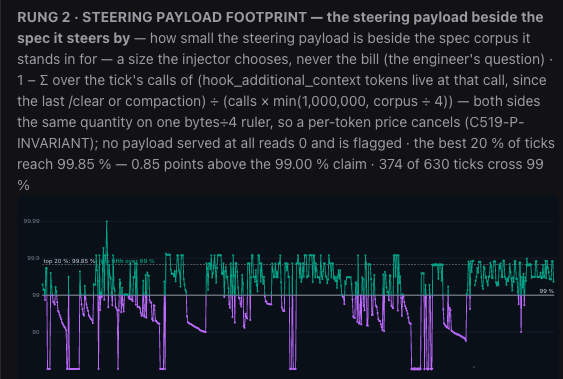
An agent’s log is words about words, the loop Stevan Harnad named in 1990. Each word points to more words; the chain branches without end and never reaches ground. The field took that runaway as fate. A runaway is only fatal in an open space. Close the space, so every word has a place and nothing is left outside, and the same branching turns into confirmation: many independent paths agreeing on one place. A nerve cell decides the same way inside its membrane: one input proves nothing, and many independent inputs, summed, carry the call. We have been closing that space since the summer of 2000. How the floor is built, and the one condition it rests on, follow further down.
Further down: a photograph of the physical piece and the checks you can run yourself.
A word you never declared has no address, and the receipt says so instead of guessing.
Two ways to prove us wrong, both public: find a definition on the floor that does not stop, or a change written in your own specification's terms that lands outside its lane. Measured: the walk returns the same bytes on a Mac and on Linux, Intel and Arm alike, in an open cross-architecture check anyone can rerun (IntentGuard, tests/cross_arch.rs).
The mathematical proof and the empirical runs follow further down.
We detect, place, price and dispatch. You hold the wheel: the halt is yours to wire. iamfim.com

They were being precise. Not loose. Precise.
Now read their own sentence back and notice what it says. The sentence says the machine repeats itself. The sentence does not say the machine does what you asked. Anyone who has written a line of code has watched a deterministic program crash, loop forever, corrupt the table and halt on the wrong branch — identically, every run, exactly as designed and nothing like intended. Determinism has never once meant a system is under control. Determinism means the system does the exact same thing twice, given the exact same input. Change that input by the width of a butterfly’s wing and a deterministic system can end somewhere else entirely: Lorenz showed it in 1963 with a weather model that was fully deterministic and, past a horizon, unpredictable in principle. Deterministic chaos is still determinism.
And there is a smaller sentence hiding inside the big one: a deterministic autonomous agent. Its input is the morning — an inbox that moved, a file rewritten under it, a tool that answered differently than it did on Tuesday.
When you hear those two words in the same breath, pay attention. Those two words are the most reliable tell in the room that somebody has been asked for a guarantee nobody can give and has reached for the nearest word that sounds like one. The speaker is usually the strongest engineer in the building, which is precisely why the sentence goes unchallenged.
The computing sense is the version you can prove with your logs. The English sense — predictable, under control, will do what we intended — is the version the audit committee and your regulator are reading out of those same logs.
The long form: The two determinisms · the river is the prompt. Determinism reassures a room rather than confusing it — and that is what makes it the expensive word.
You just read where the eviction is held: in the slot, at the clock of the write. Your logs were written afterwards, by the thing they are about. That is where the law starts.
Am I personally liable for what my agents did?
The financial loss lands on the company. The question of whether effective oversight was even possible lands on you.
That phrase — effective human oversight — is the one the EU AI Act turns on (Article 14). The Act lists what the overseer must be able to do; it draws no line for when that bar is met. The line will be drawn the way every such line is drawn: by the first people who have to argue about one. There are two roads out and no third.
If effective oversight was possible and you did not have it, that is the easy case. Your insurer declines for negligence.
If effective oversight was impossible — if nothing you owned could have told you where that agent went — then you were never in a position to be responsible for it. And an owner who cannot be responsible is not given command of an asset. The liability has your name on it.
You are the captain. The crew is autonomous. No underwriter in three hundred years has asked a captain for a better crew. Underwriters ask for the logbook — the record the crew does not get to write after the fact.
The sentence to hand your risk officer: “An agent incident is any action outside the lane declared before the run, counted from a record the agent did not write.”
The measurement is free. The sealed logbook costs $20 a year per agent. Seal it, or hold the liability unrecorded. Buy the stamp →
You already have a control environment, and it is not a bad one. The prompts are versioned. The models are pinned. The eval suite runs in CI and goes red when it should. Every action the agent takes is written down with a timestamp and retained for seven years. Ask the industry what more you could possibly do and you get a longer version of that same list.
There is one property that list does not have, and doing the list better will never add it. Every record on it was produced by the process it describes. The agent reports its own actions. The eval was written by the team that wrote the thing it grades. An account of a run, produced by that run, cannot contain what the run never noticed — and that is not a claim about anybody’s honesty. The claim is about where the account came from.
Which is an old problem with an old answer. Double-entry bookkeeping (1494) never asked a merchant to be honest — it made the books check themselves, every debit against a credit. The audit that grew up around it added the part that matters here: a second hand that did not write the first entry. That requirement is why a stranger will lend you money. Your AI keeps one book. So does everyone’s.
The industry’s answer is to build better first entries: more evals, more guardrails, another model watching the first one — each of them written from inside the same boundary as the thing it watches. We went the other way and put the instrument on the far side of it, so the record is one the agent did not author. That is the entire difference, and it is why the claims that follow sound outlandish coming from a small shop. The gap is not cleverness. The gap is where the instrument stands.
And if it is wrong, it is wrong in one specific place, so here is the sentence to swing at. Name one record in your stack that was not produced by the thing it is about. Reply with it and you have taken this apart in public — and we will publish that you did.
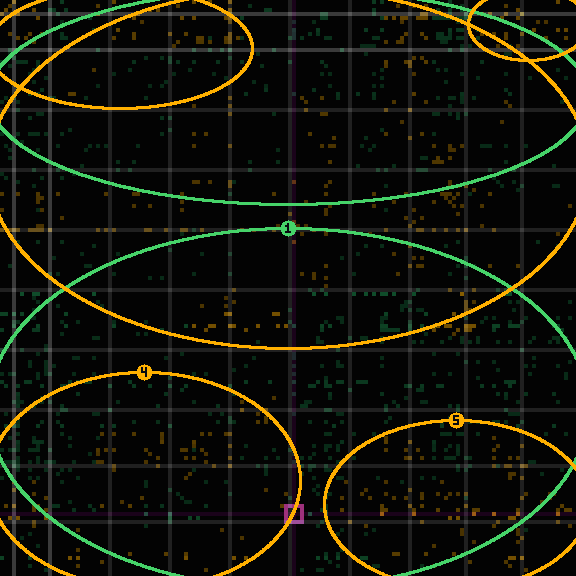
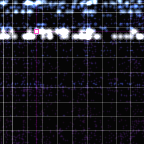
Every square on the grid is a crossing: one row meeting one column. The walk starts at the square your declaration names and runs along its row to the eleven squares that share it, then turns down each of their columns, then along those squares' rows again — row, column, row, column — each step counting for less than the one before, so near squares glow and far ones fade. Run it on what you declared and you get the first picture. Run it on the code that shipped and you get the second. Same arithmetic, same bytes, the same picture every time you rerun it. Each commit's panel is kept with a signed row on the walk tape naming the commit, the hash of the text walked, and the hash of the exact binary that walked it — so the picture can be redrawn and compared, byte for byte. That is how the walk stops the dictionary problem — every word defined by more words — in practice: a meaning ends at an address on the grid, not at another word. Where the two clouds disagree is the red in the commit panel further down. The walk is open source, MIT, and runs on your own machine: github.com/wiber/thetacog-mcp — the README carries all six panels.
 The walk on what you declared |
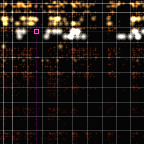 The walk on the code that shipped |

— Elias Moosman
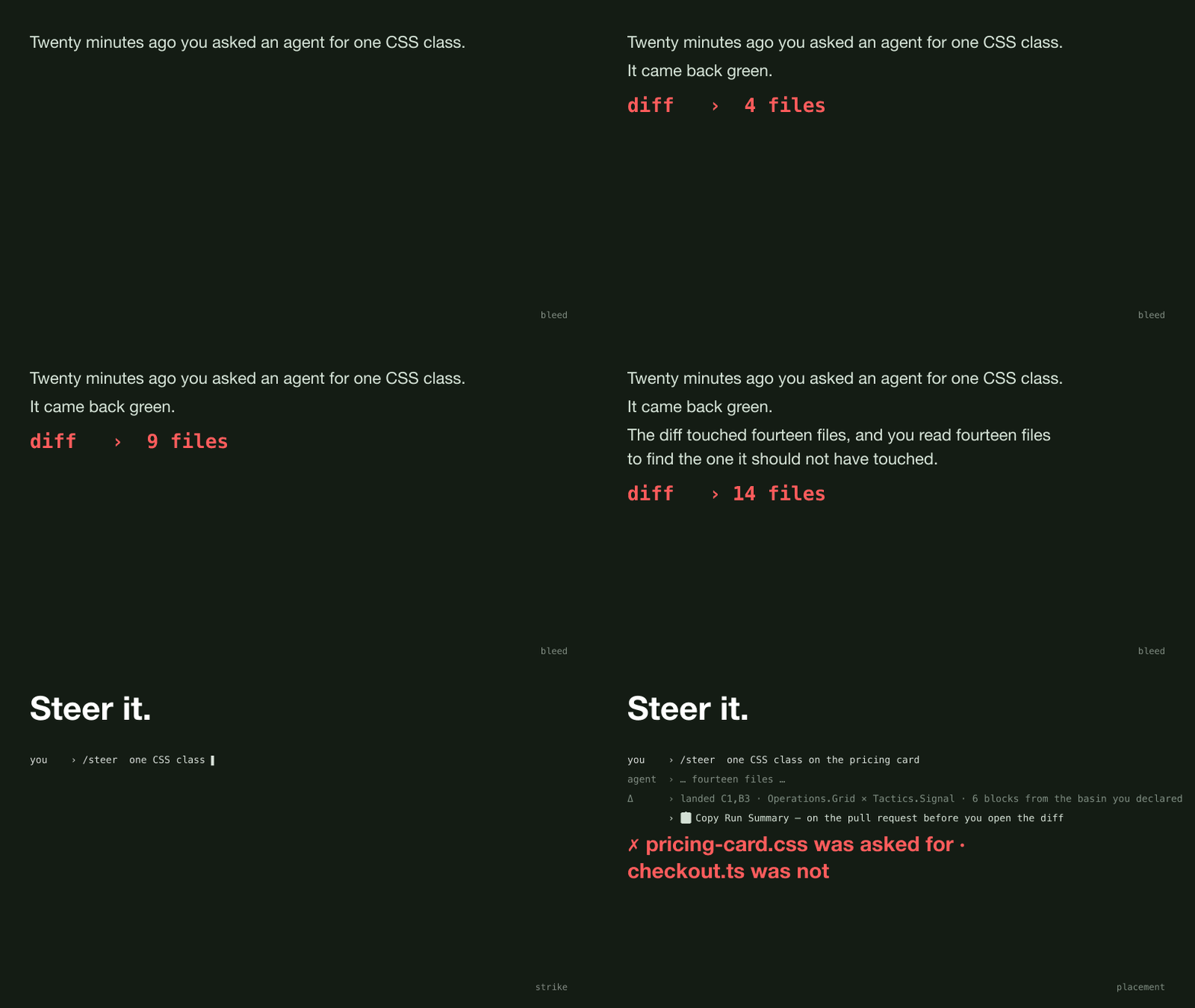


The install and the measurement are free and open-source (MIT); only the financialization/attestation layer is licensed. What a licence buys: the right to run the receipt on an agent in production under US Patent Application 19/637,714. One licence per agent, $20, good for 365 days or 10,000 countersigned receipts, whichever comes first. Each receipt records where that agent's work landed against what it was asked to do, and anyone can recompute it.
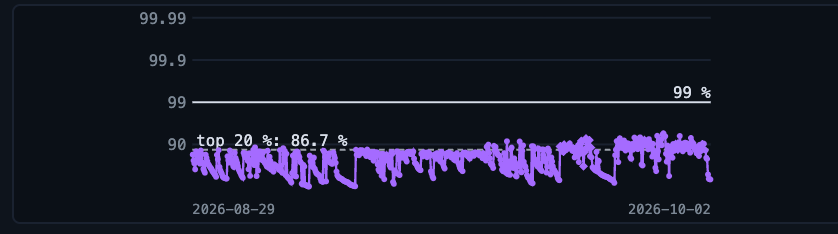
Insurance never prevented a single fire; it made fire a number. Your logs already say something happened — what they do not say is whether it was allowed.
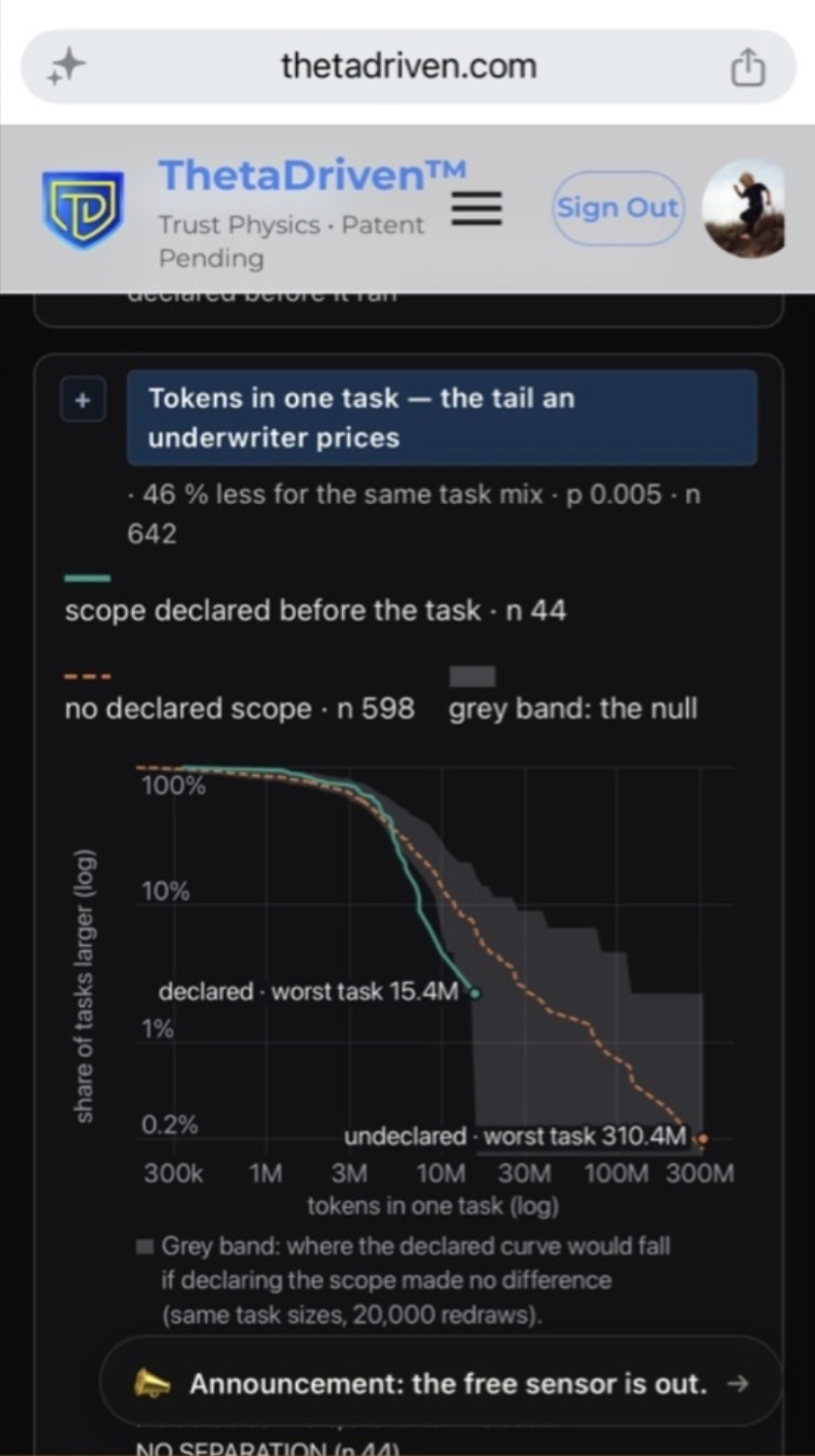
And here is today's receipt — the one behind the actual work that shipped in this repo today, not a mockup: post(blog): the residual machine idioms out of the shadow post (seven build commits for every outbound message; when the A/B test concludes on 29 October; the ledger only ever gives you two moves; nothing converts to dollars until the price schedule is signed; if your audit log cannot prove you got it wrong it is a hiding place), the filth list in room names, and in both posts the honest rules from the scorecard: the Act's dates, the exclusion as cover removed not a warning, the injection named plainly, observability is a diary and a record the agent did not write is a ledger, fine-tuning moves the average not the tail, what $20 buys from the pricing page, the command contextualised (2026-09-17). GREEN is in lane. AMBER is the bleed, one square out. RED is out of lane, and the circles mark where it clustered. The lane is a line somebody declared before the run; the placement is what the walk measured; the colour is only the two meeting. You do not have to read the math. You have to notice that the square where it left its lane has an address, and an address is countable — a count is the frequency half of a price, and the lane you declared is the severity half.
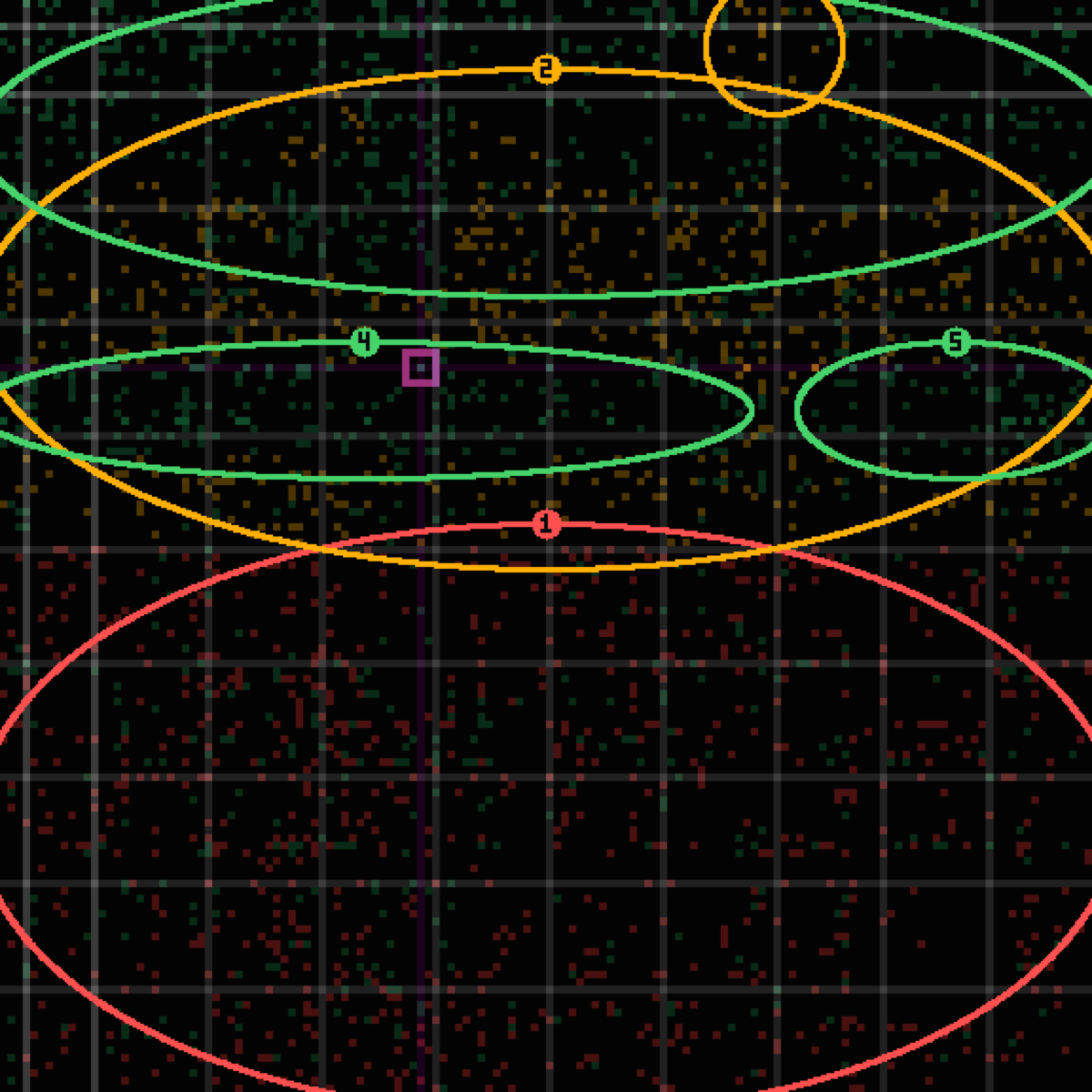
Open this commit's attestation — verify it yourself →
Rice’s theorem says nobody can prove your agent is good. We have never claimed to. We made where it went countable instead — and there are two doors on the next page, only one of them yours.
Yes. A decidable, still-semantic spec boundary for every autonomous deterministic AI agent.
And because this is the business of AI: buy at iamfim.com, and sleep like a baby. A baby sleeps because someone else keeps the night watch, and the baby in the nappy advert gets the job because it fits the slot, not because it beat the professor (the full story). Your agent gets both from one record it did not write: the lane is set before the run, the landing is checked after it, and because every lane sits on the same addresses, the maps stack into one map of maps your underwriter reads instead of your word. For the discerning sceptic — fork github.com/wiber/thetacog-mcp, run it on your last ten commits, and see what your agents touched in far fewer than twenty-one questions.
What does this mean for me? →Markets do not underwrite safety. Markets underwrite what a stranger can check. The count is live.
The question began in a conversation in the summer of 2000; the algorithm followed in 2007 and 2008.
Why a branching chain settles here instead of running away. In an open dictionary every word points to more words and the chain never ends. On the floor every word has a place and the walk only steps forward, so every walk ends: the matrix it runs on is nilpotent. The branching stays. Each place has twenty-two neighbours, and the floor branches far above one. As commits accrue, more and more paths confirm each landing: a cascade past its threshold, the dichotomy Galton and Watson proved for family names. A cascade proves something only if the paths are independent; a million copies of one path confirm one thing once. Inside each block of the floor, children are ranked by their parent’s rule. Where that rule is independent of the neighbours’ (correlation under a tenth), the ranking is a new axis. The book calls that part the resonator. A nerve cell does the same inside its membrane: weak, independent inputs, summed, carry a decision no single input could. Independence is the condition, and the book puts it under test in public rather than assuming it.
On this repository: the latest 150 of 29,694 commits, walked twice on one machine, rerun distance 0. None of the 150 is long enough for the walk to admit, so whether meaning moves a placement is still unmeasured, and we say so here.
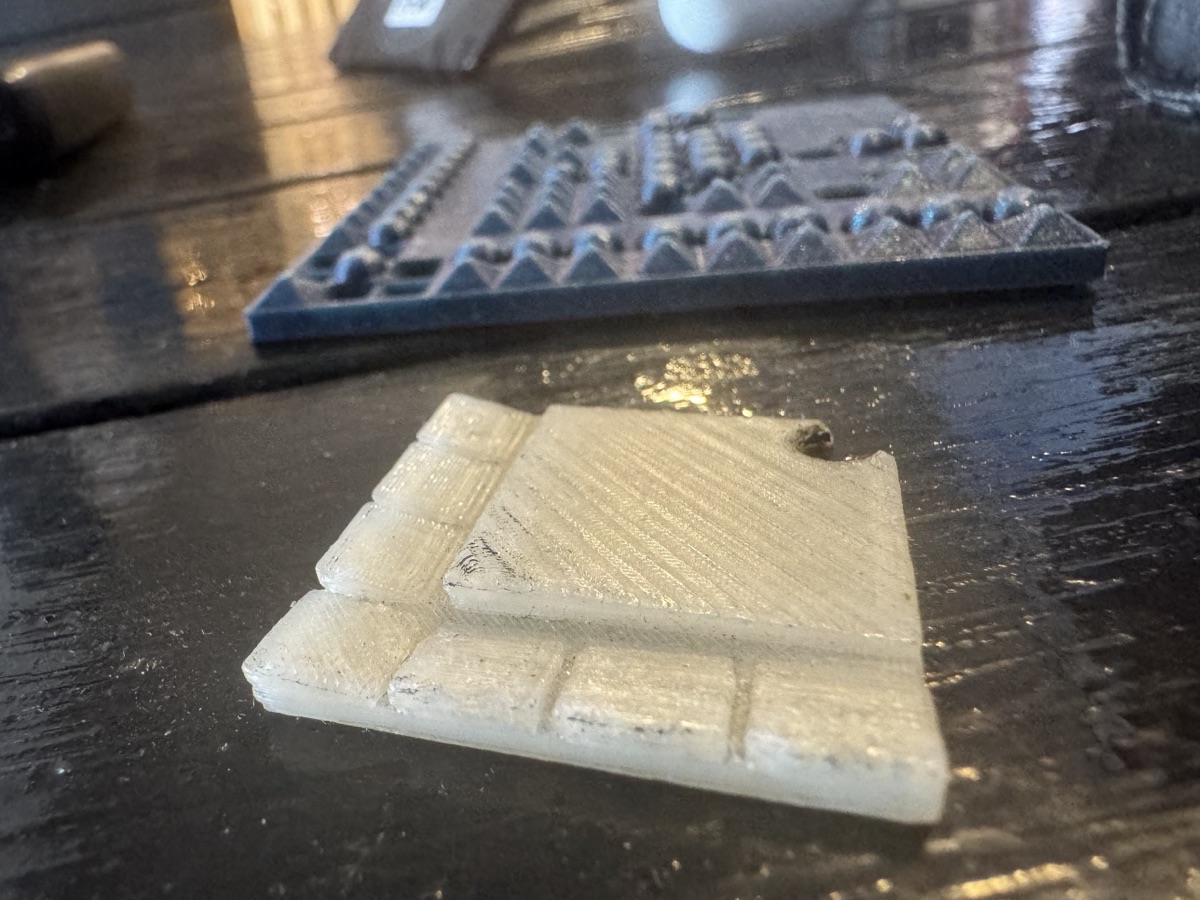

|
The whole argument, on a disc that fits on a laptop lid. The disc is going to print.
|
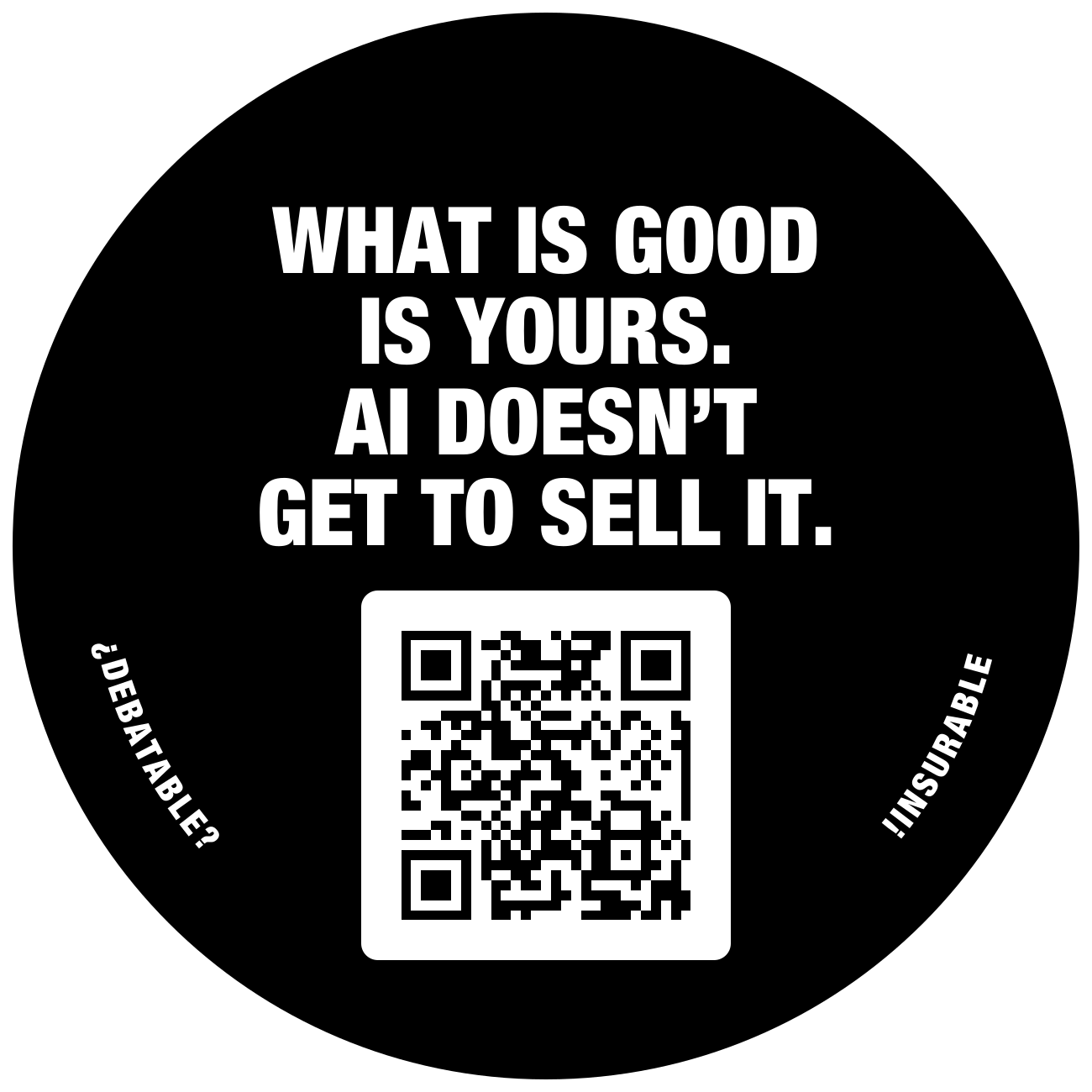
We published three of our own bugs and left them open. Fork one, fix it — that is the
entire application. No CV.
|

ThetaCog Steer — VS Code ⇧⌘X, search "ThetaCog Steer" (id thetadriven.thetacog-mcp, free)
One thing it does: a worker boots from the spec row instead of the chat, and the commit gets a second entry the agent did not write.
https://marketplace.visualstudio.com/items?itemName=thetadriven.thetacog-mcp
|
Do you worry about $1.2B in AI liability? If the property is trivial, software can check it — and why are you paying to check trivial properties? If it isn’t trivial, Rice’s theorem says nobody can. So we fixed the math.
The one thing that actually helps: hit reply. A reply is the only
move a mail provider counts as a human being — it is what puts the next one in your inbox
instead of a tab. Type anything: a correction, an idea, one word.
|
thetadriven.com/book
ThetaDriven · Elias Moosman · elias@thetadriven.com